China.
What is China's credential rule for influencers?
Since 2025, influencers need verified professional credentials to talk about medicine, law, finance, or education. No degree, no broadcast. Half of KOL content is non-experts making claims. That half just became illegal. The MCN agencies that manufacture these stars build on land the party can reclaim with 1 memo.
Igor's predictions on China
 PredictionTrackingCHINA KOL 2030CHINA'S KOL CRACKDOWN: A $12 BILLION WIPEOUT.
 PredictionTrackingLIVE COMMERCE 2030LIVE COMMERCE HITS $3 TRILLION. CHINA SELLS 3 IN 5. THE HOST GOES AI.
 PredictionTrackingMICRODRAMA REELS 2030MICRODRAMAS PASSED CHINA'S BOX OFFICE. NEXT STOP: THE WORLD'S CINEMAS.
 PredictionTrackingGERMAN AUTO 2031GERMAN AUTO'S ECONOMIC WEIGHT HALVES: 6% OF GDP TO 3%.
 PredictionTrackingFUTURE OF EVs 2050EV FANTASY MEETS PHYSICS: CONVERTING 1.64 BILLION CARS TAKES 28 YEARS.
 PredictionTrackingSTARLINK TELCO 2030STARLINK BECOMES AMERICA'S MOST VALUABLE TELECOM OPERATOR.
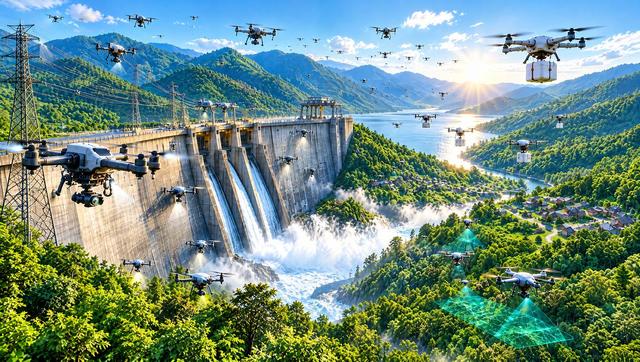 PredictionTrackingDRONES 2030MAX VERSTAPPEN AND IGOR BEUKER: A $150 BILLION DRONE SKY BY 2030.
 PredictionTrackingBIRTH-RATE COLLAPSE 2035BIRTH-RATE COLLAPSE: THE WORLD STOPS REPLACING ITSELF.
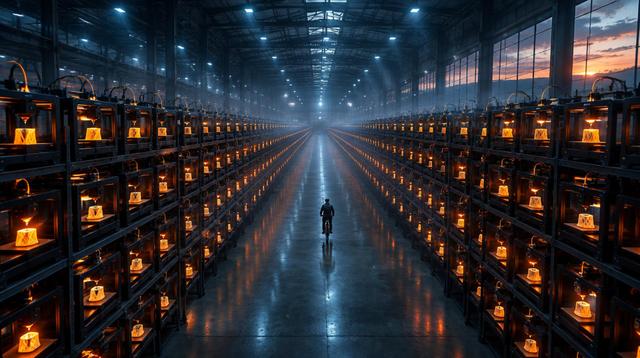 PredictionLanded3D PRINTING 2025MAX VERSTAPPEN AND IGOR: 3D PRINTING POWERS F1 AND BUSINESS BY 2025.
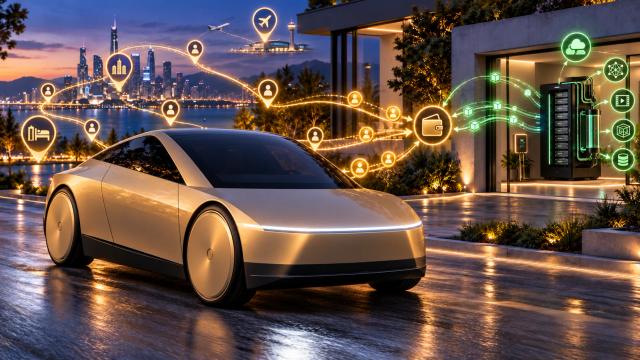 PredictionTrackingTESLA CYBERCAB 2035MACHINES YOU OWN EARN $1 TRILLION, NOT YOUR HOURS.
 PredictionTrackingGLP-1 OZEMPIC 2030WEIGHT-LOSS DRUGS LIKE OZEMPIC: 100 MILLION PEOPLE ON THEM.
 PredictionTrackingHUMANOIDS 2050HUMANOID ROBOTS: 14X BY 2030, THEN $12 TRILLION IN ROBOT WORK.
 PredictionTrackingOFFSHORE DATA CENTERS 2030AI DATA CENTERS FLEE TO SEA AND SPACE, BEYOND LAW, TAX, AND REACH.
 PredictionTrackingAI HALLUCINATION 2030AI hallucinations fall hard by 2030. The next AI war is permission, not accuracy.
 PredictionTrackingRAW MATERIALS 2030CRYPTO ROBBED THE PEOPLE. RAW MATERIALS PAY THEM BACK.
 PredictionTrackingHUMAN DATA ECONOMY 2030HUMAN DATA: THE $1 TRILLION A YEAR AI GOLDMINE HIDING IN PLAIN SIGHT.
Questions about China, answered
What is Yttrium, and why does China control its supply?
Yttrium (Y) is a rare-earth metal used in jet engines, semiconductors, lasers, and advanced ceramics. Its superpower? Heat resistance. Yttrium-based coatings protect jet-engine components from extreme temperatures. Yttrium is typically recovered alongside other rare earths from ores and mineral-rich clays, then refined into yttrium oxide, a white powder used by manufacturers. In 2025, the USGS estimated world output at 10,000–15,000 metric tons of yttrium oxide equivalent contained in mined concentrates. China and Myanmar were the main sources. Much of Myanmar's rare-earth output is processed in China, which dominates refining. The price shock? In October 2026, reported Argus assessments put yttrium oxide outside China near $1,150 per kilogram. Inside China, high-purity oxide was quoted below $9. China imposed export controls in April 2025. Japan faces shortages. The US has 100% net import reliance. Beijing controls a critical supply chain for aerospace and semiconductor manufacturers. My forecast: every year through 2030, the annual average price of comparable yttrium oxide outside China remains at least 10 times the Chinese domestic price. Lynas targets yttrium production in early 2028, but 1 new producer will not eliminate China's dominance. Raw materials, natural resources, commodities, minerals, critical minerals and rare earths: see my top 10 raw materials, my OIL 2075 prediction card and the top 10 richest countries in natural resources.
Full answer →What are rare-earth magnets, and why does China dominate their supply?
Rare-earth magnets are the strongest permanent magnets on Earth. They drive the motors in electric cars, wind turbines, drones, humanoid robots and fighter jets. They are made from rare earths such as neodymium, praseodymium, dysprosium and terbium. One country dominates. In 2024, China controlled 60% of magnet rare-earth mining, 91% of refining and 94% of magnet manufacturing, according to the IEA. Why are rare earths in the news? China uses them as a weapon in its trade war with the US. In April 2025, Beijing restricted exports of key rare earths. Within weeks, Ford paused production of its Explorer in Chicago for lack of magnets. In October 2025, China widened the controls. After the Trump and Xi deal, it paused the new controls for 1 year, until 10 November 2026. Export licenses are still required. The price shock? In 2026, dysprosium and terbium cost around 5 times more in Europe than inside China, according to the IEA. No magnet, no electric car. My forecast: China still produces at least 85% of the world's sintered rare-earth permanent magnets in 2030. The US, Europe, Japan, and Australia will invest heavily to reduce their dependence. Raw materials, natural resources, commodities, minerals, critical minerals and rare earths: see my top 10 raw materials, my OIL 2075 prediction card and the top 10 richest countries in natural resources.
Full answer →What is copper, and why does China control its refining?
Copper is the metal that carries electricity. Power grids, electric cars, wind turbines, and AI data centers all depend on copper wiring. In 2025, the world mined about 23 million metric tons of copper, according to the USGS. Chile led with 5.3 million, followed by DR Congo with 3.2 million and Peru with 2.7 million. Zambia added 940,000. Where copper is mined is not who owns it. In Chile, major producers include state-owned Codelco and BHP. In Congo, Chinese companies operate major mines, including CMOC at Tenke Fungurume and Zijin, which co-owns Kamoa-Kakula with Canada's Ivanhoe. The choke point? Refining. China mines about 8% of the world's copper but produced approximately 45% of refined copper in 2025. Trade is turning political. In August 2025, the US imposed a 50% tariff on specified semi-finished copper products and copper-intensive derivatives. Refined copper cathodes remained exempt. London Metal Exchange copper averaged approximately $9,945 per metric ton in 2025, then reached $14,850 on August 17, 2026, according to Chile's copper commission, Cochilco. My forecast: every year through 2030, the annual average London Metal Exchange copper price stays above $10,000 per metric ton. The IEA's 2026 outlook projects a potential 25% copper mine-supply gap by 2035, based on announced projects and projected demand. Raw materials, natural resources, commodities, minerals, critical minerals and rare earths: see my top 10 raw materials, my OIL 2075 prediction card and the top 10 richest countries in natural resources.
Full answer →What is gallium, and why does China control its supply?
Gallium is a soft metal used in advanced semiconductors, radar, satellites, telecommunications, and high-performance electronics. Its superpower? Helping chips operate at high frequencies and handle high power. Gallium is rarely mined directly. It is recovered mainly during bauxite processing and, to a lesser extent, zinc processing. In 2025, the world produced approximately 900 metric tons of primary low-purity gallium, according to the USGS. China accounted for 99%. Africa matters. Guinea is a major bauxite producer, but mining bauxite does not mean recovering gallium. The processing stage is the choke point. The geopolitical weapon? Export controls. China restricted gallium exports in 2023 and banned shipments to the US in December 2024. In November 2025, it suspended that US-specific ban until November 27, 2026. Export licenses are still required. The price shock? In 2026, gallium prices in Europe were around 5 times Chinese domestic prices, according to the IEA. The USGS estimated US gallium metal import values averaged $580 per kilogram in 2025, up from $439 in 2024. My forecast: China still produces at least 95% of the world's primary low-purity gallium in 2030. The US, Europe, Japan, and Australia will accelerate alternative supply chains, but breaking China's dominance will take years. Raw materials, natural resources, commodities, minerals, critical minerals and rare earths: see my top 10 raw materials, my OIL 2075 prediction card and the top 10 richest countries in natural resources.
Full answer →What is China's credential rule for influencers?
Since 2025, influencers need verified professional credentials to talk about medicine, law, finance, or education. No degree, no broadcast. Half of KOL content is non-experts making claims. That half just became illegal. The MCN agencies that manufacture these stars build on land the party can reclaim with 1 memo.
Full answer →Why did Germany lose to China in cars?
The same disease as the EU: bureaucracy and bad timing. The speed and timing of innovation is vital to competitiveness. Blockbuster ignored it. Kodak ignored it. Now the German car manufacturers. Advertising wins quarters, innovation wins decades. Germany bought quarters. China bought the decade.
Full answer →Who replaces China's human influencers?
AI avatars livestreaming on Douyin and Taobao 24 hours a day. They never sleep, never get taxed wrong, never say the wrong thing about tanks. In the West, influencers fear the algorithm. In China, the algorithm has a boss.
Full answer →How is China putting influencers on a leash?
3 ways: tax, credentials, and AI labels. Tax: Viya was ordered to pay about $210 million in taxes, penalties and fees. Credentials: regulated professional content including health, finance, law and education requires qualifications. Labels: since February 1, 2026, AI commerce hosts must be continuously identified as AI, and the operator stays liable. In the West influencers fear the algorithm. In China the algorithm has a boss.
Full answer →Why does China's AI education strategy matter?
How a nation teaches AI today decides who leads the AI economy tomorrow. I read China's AI education push as a signal of long-term intent: AI lessons are mandatory in every Beijing school since September 2025, from age 6. AI literacy becomes as fundamental as reading, writing, and arithmetic. The countries that treat it that way compound an advantage for decades. The countries that debate it in committees import the talent later, at a premium. Everyone wants innovation. Nobody wants to change. China changed the curriculum.
Full answer →What is lithium, and why does China control its supply?
Lithium is the lightest metal on Earth and a critical ingredient in lithium-ion batteries. Batteries made up an estimated 88% of global lithium use in 2025, according to the USGS. In 2025, the world mined about 290,000 metric tons of lithium content, excluding undisclosed US output. Australia led with 92,000 tons, then China with 62,000 and Chile with 56,000. Africa is rising. Zimbabwe mined 28,000 tons, more than Argentina. Its mines include Chinese-owned Bikita (Sinomine) and Arcadia (Huayou). Mali added 9,400. In Congo, China's Zijin started production at the disputed Manono project in May 2026 and began shipping to China in June. The choke point? Refining. China mines about 21% of the world's lithium but refines roughly 70% of its lithium chemicals, according to the IEA. Battery-grade lithium carbonate averaged $63,700 per metric ton in 2022 and an estimated $9,000 in 2025, according to USGS data from Benchmark Mineral Intelligence. My forecast: electric vehicles and energy storage will account for over 90% of lithium demand by 2030. China will still lead lithium refining in 2030. The IEA's 2025 outlook projects a potential 40% gap in lithium mine supply by 2035 under its Stated Policies Scenario. Raw materials, natural resources, commodities, minerals, critical minerals and rare earths: see my top 10 raw materials, my OIL 2075 prediction card and the top 10 richest countries in natural resources.
Full answer →How big is China's KOL influencer market?
$16.8 billion in 2025, and left alone it grows to $24.7 billion by 2030. I forecast the scenario nobody is modeling: a severe crackdown cuts that 2030 market by 50%, wiping out $12.4 billion a year and leaving the industry smaller than it was in 2025. 5 years of growth, gone.
Full answer →Is the AR platform shakeout a collapse?
No, AR is not collapsing. It is only getting bigger. Spatial computing, AR and augmented intelligence converge into 1 new computing layer over the physical world. Everything in the real world needs it: factories in China, cars, robots, smart cities and glasses. They all need a precise, constantly updated 3D map of the real world. My forecast: AR grows from $42 billion in 2025 to $600 billion by 2030. Spatial computing becomes critical national infrastructure by 2030, its builders the Oracles and Microsofts of 2035. 1 of the biggest trends ever. The shakeout is consolidation, not collapse. Niantic sold its Pokémon GO games to Scopely for $3.5 billion in 2025 and kept the map: 30 billion urban images from 700 million players. The trend I predict. The mission I choose: this layer serves people, never scores them.
Full answer →Is 3D printing too slow for mass production?
No, 3D printing is no longer too slow for mass production. First, China already runs massive 3D printing factories with 5,000 to 10,000 printers: Kings Huafast runs about 10,000 Bambu Lab printers in 1 factory in Shenzhen. Second, new light-based technology speeds 3D printing up at an exponential pace. Tsinghua University's holographic light printing, called DISH, prints complete millimeter-scale objects in about 0.6 seconds (Nature, 2026). Exponential technologies give us the clues: 8, 16, 32, 64, 128. Boom. "Slow" just died as an excuse. Speed was the last defense of the container ship, and it is gone.
Full answer →Which countries will lead the drone industry by 2030?
China builds most of them, Ukraine and Russia fight with them, and Turkey, Poland, and Israel sell them. Not by drone count. 7 jobs, 9 countries: building, banning, fighting, selling, shipping, inventing, protecting. China builds them: 70% of the world's civilian drones, and with Hong Kong $4.6 billion of exports in 2025, more than the next 18 exporting countries combined. The US bans them: every new DJI model blacklisted in December 2025. Ukraine fights with them: 4 million built in 2025, 7 million planned for 2026. Russia matches it: 1.2 to 1.8 million a year. Turkey sells them: Baykar, $2.2 billion in 2025 by its own count, mostly military. Poland ships them: the number 3 drone exporter on Earth, $882 million, ahead of the United States, Europe's route to Ukraine. And the Netherlands, my home country, is number 5 at $632 million. Israel invented them: IAI and Elbit, drones sold to 49 countries. India protects its own: imports banned since 2022. Most of my $150 billion drone market in 2030 still starts in Shenzhen.
Full answer →Why do microdramas beat cinema?
Because a cliffhanger every minute on your phone beats 2 hours in a cinema seat 20 minutes away. Attention beats awards. China proved it in 2025: microdramas did $9.4 billion against cinema's $7.3 billion, in cinema's best year since the pandemic. The format is 6 years old. The cinema is 130.
Full answer →Will the EU digital ID wallet become mandatory?
On paper, no. In practice, yes, by 2030: no wallet, no government services, no bank account, no travel. The law is already signed. Every 1 of the 27 EU states must offer the wallet by December 24, 2026. Denmark's wallet is in production, France is testing, Germany launches in January 2027, and Ireland and Spain run public pilots. The digital euro follows: pilot in 2027, rollout in 2029. The borders are already wired. Since October 2025 the EU Entry/Exit System takes fingerprints and face scans at every border, logs every crossing and counts your days by machine. Identity, money, movement: a total control grid. The cage builders were never on your ballot. Ursula von der Leyen, President of the European Commission, was installed by a council deal and censured by the EU Court over Pfizergate. Christine Lagarde, President of the European Central Bank, was convicted of negligence in 2016 over a €403 million state payout, received zero punishment, and now builds the digital euro. China's social credit state, rebuilt with European branding, the switchboard in Brussels, not your parliament. Check it yourself, every law is public: the EU law database, the ECB's digital euro pages, the UN's Agenda 2030. Read them before they read you.
Full answer →How will biotech and genomics change farming by 2030?
By 2030 genomics and biotech become as important to farming as machinery. Traditional crop breeding can take years. Genomics, gene editing such as CRISPR and AI-assisted breeding speed up the search for crops that tolerate drought, resist disease, use fewer inputs and produce better yields. This is one of the biggest AgTech shifts people underestimate. Biotech, from CRISPR to lab-grown food, is disrupting both pharma and agriculture. It is exponential technology. It does not grow at 10% a year. China moves fast. In December 2024 it approved 17 new genetically modified (GMO) and gene-edited crop varieties. 5 of them are gene-edited, including wheat, rice, corn and soybeans. Biotech also reaches beyond crops: biological fertilizers, biological pest control, alternative proteins and microorganisms that improve soil and plant health. The next agricultural revolution will not only happen in the field. Part of it will happen in the lab.
Full answer →How much money has Big Alcohol lost?
Big Alcohol lost $830 billion in market value since June 2021: the 50 largest listed beer, wine and spirits companies, the core of the alcohol industry, are down 46%. Alcohol stocks like Diageo, Pernod Ricard and Rémy Cointreau trade at decade lows, and Kweichow Moutai, China's most valuable liquor brand, is down over 40%. The sellers call it a dip. The tape calls it a verdict. That is structural repricing of the alcohol economy, not a temporary fluctuation in consumer taste. The old model was built on nightlife, VIP tables and alcohol-driven social signaling. Gen Z walked away from it. My Alcohol Economy card predicted the fall, and it sees no recovery by 2030. Volumes keep falling 2 to 3% a year. Revenue still climbs from $1.8 trillion to roughly $2.2 trillion, but on price and premium bottles, not on more drinking. Gen Z sentenced Big Alcohol, and the dictators do not negotiate. Or would Gen Z punish Heineken for its Covid campaign "The night belongs to the vaccinated"? Even worse? McDonald's promised a free hamburger for the proof of a second jab! I am not joking!
Full answer →Is the B2B sales dinner dead?
No, the B2B sales dinner is not dead. It had a dip, and it is coming back. Global business travel, the engine behind the client dinner, hit a record $1.57 trillion in 2025 and passes $2 trillion by 2029. In a world going digital, live experiences only grow the coming 10 years: live events, live sports, live shows, live public speaking, live gatherings. My forecast: live events hit $2.5 trillion by 2030. The room beats the feed. AI agents take over the routine buying. Gartner forecasts 90% of B2B buying via AI agents by 2028. That makes the dinner more valuable, not less. The strategic deals stay human. Trust is built at the table, not in the inbox. In many cultures, from the Gulf to China to Latin America, you cannot even do business without building a personal relationship first.
Full answer →How fast do humanoids grow by 2030?
14x in 5 years, my call: from about $2.7 billion in 2025 to about $37 billion by 2030, above the analysts' $11 to 25 billion. China builds more than 4 in 5 humanoids today, led by AgiBot, Unitree and UBTech. The money is in: Apptronik raised $520 million at a valuation above $5.5 billion, with Google among the lead investors. I am an investor in Apptronik.
Full answer →How many packages do drones deliver today?
About 8 million worldwide in 2025, on track for 15 to 20 million in 2026. Zipline is the leader with 2 million deliveries done and 4,320 a day. Wing, owned by Google's parent Alphabet, is past 400,000. Walmart passed 1 million drone deliveries across its partners in May 2026. Amazon flies from more than a dozen US cities. In China, Meituan drones carry food in Shenzhen. Now the reality check: the world ships 2,760 parcels every second. Drones do 1 every 4 seconds. Big growth, tiny base. The drone delivery business itself is $4 billion in 2026 and $15 billion in my 2030 forecast.
Full answer →Why warn about resource scarcity?
I warn about resource scarcity because population growth, development, and technology spike demand for energy, food, water, and raw materials all at once. AI data centers, electric cars, and robots pull on the same copper, lithium, and power grid, and China controls the refining of most critical minerals the West needs. I name the strain, then refuse to surrender to it. Scarcity is not destiny. The same exponential technologies that increase demand can open new supply: asteroid mining, desalination, precision farming, and recycling at scale, if leaders invest early instead of reacting late. My own money follows that logic. I steer my misfits toward raw materials, not crypto. Innovation is the way through. Raw materials, natural resources, commodities, minerals, critical minerals and rare earths: see my top 10 raw materials, my OIL 2075 prediction card and the top 10 richest countries in natural resources.
Full answer →What is cobalt, and why does Congo control its supply?
Cobalt is a hard, silver-blue metal inside the batteries of your phone, laptop and electric car. It also goes into jet engines. Batteries took about 76% of global cobalt demand in 2024, according to the Cobalt Institute. One country dominates. In 2025, DR Congo mined nearly 3 of every 4 tons, according to the USGS. Chinese companies run major Congo mines, and China refines most of the world's cobalt. Why is cobalt in the news? The human cost. Next to the big industrial mines, people dig by hand, children included. UNICEF estimated that 40,000 children worked in mines in southern Congo, Amnesty International reported. In November 2025, a US rights group sued Apple, alleging its supply chain still uses Congo cobalt linked to child and forced labor. Apple calls the claims baseless. The squeeze? Congo banned exports in February 2025, then capped them with yearly quotas. The battery in your pocket starts in a hole in Congo. My forecast: cobalt-free lithium iron phosphate batteries gain market share through 2030, reducing cobalt's share of battery demand. Total cobalt demand may still grow. Price test: US spot cobalt cathode averages below $30 per pound in 2030. Raw materials, natural resources, commodities, minerals, critical minerals and rare earths: see my top 10 raw materials, my OIL 2075 prediction card and the top 10 richest countries in natural resources.
Full answer →What is silver, and why is it becoming a strategic industrial metal?
Silver is the best electrical conductor of all metals. It powers solar cells, electronics, electric vehicles, and critical electrical connections. It is also a precious metal held by investors. In 2025, the world mined about 26,000 metric tons, according to the USGS. Mexico led with 6,300, followed by Peru with 3,600 and China with 3,400. Africa matters too. Morocco's Zgounder mine, owned by Canada's Aya Gold & Silver, became Africa's largest silver mine in 2025, producing about 4.8 million ounces. The supply problem? Most silver is mined as a by-product of lead, zinc, copper, and gold. Higher silver prices cannot quickly create new silver mines. Industrial demand fell 3% to 657.4 million troy ounces in 2025, according to the Silver Institute, as solar demand weakened. Solar manufacturers are using less silver per cell. The price shock? Silver's annual average price rose 42% in 2025. The market recorded its 5th consecutive annual supply deficit. My forecast: global industrial silver demand exceeds 700 million troy ounces in 2030, despite manufacturers reducing silver use in solar cells. Electrification, AI infrastructure, and industrial technology keep silver strategically important. Raw materials, natural resources, commodities, minerals, critical minerals and rare earths: see my top 10 raw materials, my OIL 2075 prediction card and the top 10 richest countries in natural resources.
Full answer →What is gold, and why are central banks buying it?
Gold is money without a government. No central bank can print more of it. For thousands of years, gold has served as a store of value. Today, governments and investors hold it against currency risk, inflation, and geopolitical shocks. In 2025, the world mined about 3,300 metric tons, according to the USGS. China led with 380, followed by Russia with 310 and Australia with 280. Ghana, Africa's largest producer, mined about 150. But the real gold rush is inside central banks. In 2025, central banks bought a net 863 metric tons, according to the World Gold Council. Poland led with 102 tons. Kazakhstan added 57, Brazil 43, and China 27. The price? Gold averaged $3,431 per troy ounce in 2025 on the London benchmark, up 44% from 2024. The geopolitical shift? Countries are diversifying their reserves beyond foreign currencies and government bonds. Gold carries no issuer's credit risk, although its price can fall sharply. My forecast: central banks remain net buyers of at least 500 metric tons of gold every year through 2030. Gold stays a strategic reserve asset, not a relic of the past. Raw materials, natural resources, commodities, minerals, critical minerals and rare earths: see my top 10 raw materials, my OIL 2075 prediction card and the top 10 richest countries in natural resources.
Full answer →How much of retail is bought online by 2030?
3 in 10 retail dollars by 2030, online or through an AI agent, against the analysts' 1 in 4. Today it is 1 in 5. The extra comes from 2 waves the trend line does not contain: agents that shop for you, $3 to $5 trillion by 2030 on the consultancies' count, and social commerce, TikTok Shop, SHEIN, Temu, where the feed is the shop window. China, the UK and Korea are already at 25 to 30%.
Full answer →Does the West have the volume for live commerce?
Not yet. The West has the buyers, not the habit. In 2025 Americans bought $14.6 billion through livestreams. China sold more than 5 trillion yuan, about $700 billion, with a user base heading for 660 million. That is 48 times the US, and nearly 1 in 3 online dollars in China. The gap is closing fast. US live shopping grows 35% to about $20 billion in 2026. Whatnot, the live-auction app that started with Pokémon cards, sold $8 billion in 2025 and beat that whole year by mid-2026. TikTok Shop doubled its US live sales in the first half of 2026. Murder by numbers: East and South Asia count 4.7 billion people, the US and EU together fewer than 800 million. The West will never out-stream China. It wins with AI hosts, shoppable short video and 1-tap checkout. My forecast: live commerce hits $3 trillion by 2030, and China still sells 3 in 5 of those dollars.
Full answer →How big is Singles Day compared to Black Friday and Cyber Monday?
Singles Day did $238 billion in 2025, more than 5 times America's Cyber Week, but over weeks, not 5 days. Huge, but compare the clocks. Singles Day has grown from Alibaba's $17.8 billion 24-hour record in 2016 into a multi-platform, multi-week festival worth $238 billion in 2025. America's Cyber Monday 2025 hit a record $14.25 billion; the entire 5-day Cyber Week did $44.2 billion. China turned a shopping day into a shopping season.
Full answer →What makes or breaks a brand in a live room?
Makes: live shopping can convert 9% to 30% of viewers versus roughly 2% to 3% for standard e-commerce, although audiences and categories differ. Breaks: the host. Live claims move faster than compliance teams, and China's new rules keep the operator liable when AI enters the room. If the AI host invents the claim, the operator owns the problem. Script the claims, own the data, rent the face.
Full answer →What about designer babies and gene editing?
Gene editing gives us real power to prevent disease, and designer babies are the dark side of the same tool. CRISPR, the technology that lets scientists cut and rewrite DNA like a text editor, already delivered the first approved cure: Casgevy for sickle cell disease, approved in 2023. I predict real medical benefit alongside serious ethical danger around enhancement and selection. The same tool that eliminates an inherited disease can also write inequality into DNA, and China already jailed the scientist who edited the first babies in 2018. I am firm. The governance conversation cannot lag the science, because once this genie escapes, it does not go back.
Full answer →What did Tesla have to do with Germany's fall?
Tesla warned the German brands early. They laughed, at Tesla and at my predictions. Now Tesla cannot even compete with China's BYD. Who is laughing now? VW is closing German factories, Audi is cutting 7,500 jobs, and the chancellor called an emergency auto summit.
Full answer →How bad are the numbers for VW, BMW and Mercedes?
Combined operating profit down 76% to $1.9 billion in Q3 2025, the lowest since 2009, according to EY. China, once 39% of their sales, now 29% and falling 30 to 41% in a single quarter. Volkswagen sits third in China behind BYD and Geely, and its own China boss admits young buyers see it as the brand for their parents.
Full answer →Is the German car industry dying?
No, the German car industry is not dying, it is halving. By 2031 it goes from 6% to 3% of GDP on my call. China wins by making Germany irrelevant, not extinct. I said automotive gets turned completely upside down within 15 years, in Emerce, in 2017. Right on schedule. The collapse: VW, BMW and Mercedes' combined operating profit fell 76% to $1.9 billion in Q3 2025, the lowest since 2009. In November 2026 BMW Brilliance started cutting about 1,800 jobs in China, 10% of its workforce. The disease: bureaucracy and bad timing. Germany bought quarters, China bought the decade.
Full answer →Are flying cars actually coming?
Yes, flying cars are coming, gradually, not suddenly. We have seen them in sci-fi movies for almost 100 years, from Just Imagine in 1930 to The Jetsons and Back to the Future. I am not referring to the gimmick of the jumping Tesla Roadster. The real ones will look like electric air taxis. I predict urban air mobility, electric air taxis, autonomous drones, and advanced aviation cut congestion and create new transport networks in major cities by 2030. But lawmakers need to make up their minds. Laws and regulations can make or break technologies. Rules could even ban self-driving cars, and the same goes for drones and self-flying cars. The tape: China's EHang got the world's first license for pilotless passenger flights in 2025, and Joby and Archer fly test routes in the US and Dubai. The technology is closer than skeptics think and further than enthusiasts promise. The sky opens slowly, then all at once.
Full answer →What is the future of energy systems?
Future energy systems blend renewables, advanced nuclear, batteries, and AI that balances the grid in real time. I predict reliable energy infrastructure becomes ever more critical as AI, robotics, and electrification expand, and the new players prove it: Microsoft, Google, and Amazon now buy nuclear plants like they once bought server racks, and China builds more solar, wind, and reactors than the rest of the world combined. No single source wins. The win comes from an orchestrated mix, balanced by software, feeding an economy that never stops computing. Energy is the foundation under every other forecast I make. Get the energy wrong and every 2030 prediction slips.
Full answer →When will Universal Basic Income (UBI) start?
No country pays a full Universal Basic Income (UBI) today. What exists are pilots, dividends, and promises. Alaska has paid a yearly dividend since 1982, $1,000 per eligible resident in 2025 and 2026. Iran paid nearly every citizen about $45 a month from 2010, the biggest non-Western cash program on record. Inflation has eaten most of it since. Neither is the full national UBI I am talking about. The Romans called it bread and circuses 2,000 years ago. A government that pays your rent owns your vote. It is a power problem. The sellers sit in Silicon Valley. The buyers are governments on every continent. Elon Musk calls it universal high income. OpenAI proposed handing 5% of its shares to a US public wealth fund. A US senator wants a one-time 50% stock tax on the biggest AI companies. Futurist Ray Kurzweil, 13 years on Google's payroll and today chief AI officer of a humanoid robot company, says early 2030s. Peter Diamandis wants it deployed by 2028. I am independent. I take no money from anyone, not from Big Tech. I say later. Nobody can say what China, India and the Gulf will decide. Their choice sets the date of the world's first full UBI. My prediction: the first permanent pocket money arrives, Alaska style, in 1 or 2 countries by 2035. A full national UBI does not begin before 2040. And it is not a law of nature. If the people rise and refuse to be paid for their silence, there will be no UBI. Not in 2040, not ever. Digital slavery does not begin with a free check. It begins when the check becomes your only option.
Full answer →Which companies control the AI market?
The chip funnel: ASML in the Netherlands, TSMC in Taiwan, Nvidia in California, all under an export-control war between the US and China. That is why Musk is building the Terafab: to escape the bottleneck. Whoever controls chips and energy controls the $2 trillion market and the $15 trillion it unlocks.
Full answer →Why does Igor Beuker bet on a Chinese influencer crackdown?
Because I read the lawmakers, not the marketers. Laws and regulators can make or break a technology or a trend. I advise governments and world leaders on what is coming, and I read the same intentions in June 2023 when I called China's reversal on crypto and Web3. It landed. If Beijing stays hands-off, I am wrong and the market doubles. It won't.
Full answer →What is Igor Beuker's GLP-1 forecast for 2030?
I predict 100 million GLP-1 weight-loss drug users worldwide by 2030. My forecast: 50 million: United States. 30 million: China and India combined. 20 million: Europe, Brazil, Japan and the Gulf combined. I also predict US adult obesity will fall to 30%, public insurance programs in 20 countries will cover these treatments, and American food and beverage companies will lose $50 billion in annual revenue as consumption changes. These are my predictions, not established facts. The disruption goes far beyond pharmaceutical companies. Restaurants, supermarkets, food manufacturers, insurers and the longevity industry will feel the consequences. My forecast: Ozempic will change how the world eats, spends and profits. The question is not whether Big Pharma makes billions. The question is whether society becomes healthier.
Full answer →Can AgTech help feed 10 billion people?
AgTech can help feed nearly 10 billion people by 2050, by producing more food per liter of water, per hectare and per hour of labor. It has to help. Agriculture is squeezed by water shortages, labor shortages, soil degradation, climate volatility and pressure on available farmland, so more land is not the answer. That is why AgTech matters beyond tractors. Precision farming can reduce water, fertilizer and pesticide use. Drones and satellites detect crop stress earlier. China already runs more than 320,000 farm drones. AI improves planting, irrigation and yield decisions. By 2030 robots do 25% of the repetitive work on high-tech farms. Controlled-environment farming moves some production closer to cities. Biotechnology improves crop resilience. None of this means technology magically solves hunger. Food insecurity is also about poverty, logistics, politics, conflict and access. My forecast: the biggest AgTech winners will not be the companies that make farming look futuristic. They will be the ones that help farmers do more with less. The future of food is not about more land. It is about smarter land.
Full answer →What is the EU digital cage?
The EU digital cage is 3 walls closing on the people who stay in the EU by 2030: your identity, your money and your movements, all run through 1 state switchboard in Brussels. Today you still choose how you pay: PayPal, Klarna, your bank app, cash. That choice is what disappears first. Wall 1, your identity: signed law forces all 27 EU states to offer a government digital ID wallet by 24 December 2026, your passport, license, diplomas and medical records in 1 state app. Denmark is already live. Wall 2, your money: the digital euro pilots in 2027 and rolls out in 2029. Programmable money is money with rules inside: it can expire, work only in approved shops, or switch off. Wall 3, your movements: the Entry/Exit System, live since October 2025, logs every border crossing by face and fingerprint. The global benchmark: China's social credit state, rebuilt with European branding. My forecast: by 2030 the wallet is mandatory in practice. No wallet, no government services, no bank account, no travel. Keep cash alive.
Full answer →How will drones change farming by 2030?
By 2030 drones become standard equipment on advanced farms. They map, scan, spray and spot disease before the farmer sees it. China already runs more than 320,000 farm drones, and DJI counts over 600,000 in use worldwide. Drones are the eyes of the farm. AI is the brain that decides where to spray and where to water. With thermal and multispectral cameras, a drone shows which part of a field needs water, nutrients or treatment before the problem is visible from the ground. DJI claims its farm drones have already saved about 410 million tons of water worldwide. The West is behind, and politics keeps it there. US spray drone sales fell from 8,950 in 2024 to 3,711 in 2025 after US customs held up DJI shipments, and in December 2025 the FCC banned new foreign-made drone models. The tape: in 2016 I put drones before 180+ JEM-id clients in horticulture. Since then I took AgTech stages in Tanzania and Kenya. My forecast: agriculture is $12 billion of my $150 billion drone market in 2030. The tractor sees the row. The drone sees the whole farm.
Full answer →Is TikTok Shop live shopping working in the US?
Yes, and in 2026 it took off. TikTok Shop doubled its US livestream sales in the first half of 2026, with 60% more live sessions and 80% more hours on air. The base was small. In 2025 TikTok Shop sold $15.1 billion in the US, up 68%, and live was only 14% of it, up from 10% in 2024. Short video still carries the shop. Worldwide, TikTok Shop sold $64 billion, up 94%. The benchmark is China. There, live is the main stage: more than $700 billion in 2025. The whole US live market did $14.6 billion. In America, live just got its first headline slot.
Full answer →Are farm drones a real business?
Yes, farm drones are a real business. DJI alone has 300,000 farm drones spraying and scanning 500 million hectares. Crop-spraying drones grow from $4.5 billion in 2026 to $14 billion by 2030. In China's forests a drone sprays 30 times faster than a crew, and spraying drones use 20 to 35% less chemicals. I put agriculture at $12 billion of the $150 billion drone market in 2030. And drones are only the eyes: by 2030 AI becomes the brain of the farm, and connected agriculture unlocks $500 billion+ in value.
Full answer →Are people resisting social credit scores?
Yes, people are resisting social credit scores: systems where code decides your access to loans, jobs and travel, like China's social credit system. Humans do not want to be scored. In the UK, 3 million people signed against mandatory digital ID in days. The control side is live too: Vietnam closed 86 million bank accounts that missed the biometric ID deadline, 43% of all accounts in the country. If your face fails, your funds fail. Europe is next. Every EU state must offer a digital ID wallet by December 24, 2026, and the digital euro follows. Identity, money, movement: China's social credit state rebuilt with European branding. I have warned about social credit systems and surveillance societies for a decade: 2015 dark social, 2018 Cambridge Analytica, 2020 The Social Dilemma, 2022 ChatGPT eating the scraped internet. Technology can empower or control society. Never accept digital slavery.
Full answer →Will every car be electric by 2035?
No, not every car will be electric by 2035. Adorable, but physics did not sign that press release. Converting the world's 1.64 billion cars to electric takes roughly 28 years just to produce them, gated by cobalt, lithium, the Congo supply chain and the same reactor buildout the grid is begging for. Where it is going: BYD passed Tesla as the top EV maker in 2024, and 75% of battery manufacturing sits in China. Then add the grid AI needs, and the humanoids after it. And the cliff nobody prices in: EVs pay no fuel taxes, so at scale the subsidies flip into road taxes.
Full answer →Does the EV winner bleed too?
Yes, the EV winner bleeds too. BYD passed Tesla as the top EV maker in 2024, and still lost $60 billion of market value in 1 selloff. China's EV war is brutal for China too. Meanwhile BMW and Toyota quietly build a hydrogen combustion engine as their hedge. The bigger picture: converting the world's 1.64 billion cars takes 28 years, gated by cobalt, lithium and the grid.
Full answer →Is 3D printing already replacing factories?
Yes, 3D printing is quietly replacing parts of factories. Also called additive manufacturing, it is already on the factory floor. China is scaling up fastest: new 3D printing factories run thousands of printers, and Kings Huafast runs about 10,000 Bambu Lab printers in 1 factory in Shenzhen (2026). Protolabs and Xometry: upload a file, get the part in days, the Amazon of manufacturing. Adidas and Nike print shoes; the Summitz factory builds them with 3 robot arms and 10 workers instead of 60. Bambu Lab sells 3D-printable toys with programmable electronics to your kids.
Full answer →Will humanoid robots take over workplaces?
Yes, humanoid robots, automation, and AI will take over roughly 30% of all repetitive, routine work by 2030, across white-collar and blue-collar roles: parts of jobs, not whole jobs. I made that call about 15 years ago, and it is on my AI & WORK 2030 card. Maybe that is good, if we choose a brighter future. Let robots, automation, and AI do the dirty, heavy, dangerous, and repetitive work, so people can do the mindful, creative, and hospitality jobs. I predict humanoids become common across logistics, manufacturing, healthcare, and services, attacking labor shortages while lifting productivity, and I forecast $12 trillion a year in robot work by 2050. The form factor is the trick: a robot shaped like a human slots into spaces built for humans without a facility redesign. That is why Tesla's Optimus, Figure, Agility, and China's Unitree race now. The receipt: Amazon passed 1 million robots in 2025, 5 times its 2019 fleet.
Full answer →Will teleportation ever be real?
Yes, teleportation is already real for information, and for people nobody can rule it out. Quantum teleportation moves the exact state of 1 particle to another far away, no cable in between, and China's Micius satellite did it over up to 1,400 kilometers in 2017. Teleporting a person has not been done yet. But history is full of what experts called impossible, and we still debate exactly how the pyramids were built. Some even look to ancient civilizations, like the Anunnaki of Sumerian myth, for lost knowledge. Time travel? Same answer: never say never. I predict advances in quantum science deliver breakthroughs that look almost magical by today's standards: quantum crosses from lab to leverage by 2030, with Google, IBM, and China leading the race. I separate the realistic near-term, unhackable quantum communication, from the fantastical far-term, and I am clear about which is which. The magic is real. The Star Trek version is not, yet.
Full answer →What is the future of electric vehicles?
The future of electric vehicles is decided by the grid, not the car. EVs keep growing as batteries improve and costs fall, and China's BYD already sells more electric cars than Tesla on price alone. I name the real constraint: charging infrastructure, grid capacity, and energy supply. The car is the easy part. The chargers, the wires, and the power plants behind them decide how fast adoption actually happens, and EVs, AI data centers, and robots all pull on the same buckling grid. Build the invisible infrastructure or the shiny vehicles sit idle. Physics does not care about pitch decks.
Full answer →What are central bank digital currencies (CBDCs)?
Central bank digital currencies (CBDCs) are national currencies issued by a central bank in programmable digital form: a digital euro or digital dollar the state itself runs, with rules written into the money. I predict governments keep pushing them while the debate turns fierce: convenience versus surveillance, privacy versus control. The receipts: China's digital yuan is live, the digital euro pilot starts in 2027 with rollout in 2029, and the US banned a retail digital dollar by executive order in January 2025. A programmable currency can settle payments instantly and also track, limit, or freeze every transaction you make. Programmable money is conditional money: conditional on your tax compliance, your political behavior, your carbon score. The technology is neutral. The rules written around it are anything but. I fear people, not technology. Watch the governance, not the code.
Full answer →What is the future of human cloning?
Human cloning keeps advancing while raising profound ethical, legal, and societal questions. Cloning means creating a genetic copy of a living thing, and it has been real since Dolly the sheep in 1996. Today China clones pigs and monkeys at scale, and US companies clone pets for $50,000. I predict therapeutic cloning (growing your own cells or organs for transplant, no copy of you) grows in medical importance, while cloning a whole human stays one of the most controversial frontiers in science, banned in most of the world. The pattern is the one I warn about everywhere. The science sprints ahead of the ethics. Closing that gap is the real work, and it is overdue.
Full answer →What are the top 10 raw materials?
There are many raw materials, also called natural resources, commodities or minerals, far more than 10. The US lists 60 critical minerals, the EU 34. These are 10 very important ones, in no particular order: gold, copper, uranium, silver, rare-earth magnets, gallium, lithium, cobalt, yttrium and graphite. Don't underestimate water and oil. They are just as important, so I describe each of them separately. These 10 are inside your car, your phone, solar panels, wind turbines, power grids, data centers, chips, humanoid robots, rockets and missiles. The real power is not who digs them up. It is who refines them, and that is mostly China. Who controls what: • Gold: money without a government. China, Russia and Australia mine the most. • Copper: carries electricity. Chile, DR Congo and Peru mine it. China refines about 45%. • Uranium: fuels nuclear power. Kazakhstan, Canada and Namibia mine nearly 75%. • Silver: the best conductor. Mexico, Peru and China lead. • Rare-earth magnets: drive electric cars, robots and fighter jets. China mines about 70% of rare earths. • Gallium: high-power chips and radar. China produces 99%. • Lithium: batteries. Australia, China and Chile lead, Zimbabwe is rising. • Cobalt: batteries and jet engines. DR Congo mines nearly 3 of every 4 tons. Battery makers are engineering cobalt out of batteries before 2030. That's why it moves out of the top 10 after 2030. • Yttrium: jet engines and lasers. China and Myanmar. • Graphite: the other half of every battery. China mines nearly 4 of every 5 tons, Madagascar, Tanzania and Brazil follow. Some countries are very rich in raw materials, others have almost none. Ranked by the value of all their natural resources, Russia is the richest country on the planet: $75.7 trillion in a 2012 valuation, ahead of the US, Saudi Arabia, Canada and Iran. Beyond this answer: • Water: my FAQ on why water is becoming the world's most strategic resource. • Oil: my OIL 2075 prediction card. • Countries: my FAQ on the top 10 richest countries in natural resources.
Full answer →What are the top 10 richest countries in natural resources?
Russia ranked number 1 in a 2012 natural-resource valuation, with an estimated $75.7 trillion, about $31 trillion more than the United States. Saudi Arabia, Canada and Iran completed the top 5. The study estimated the value of 10 resource categories, including oil, gas, coal, timber, gold and uranium, using prices available at the time. Forget GDP. And Russia's biggest treasure in that ranking was not oil. It was timber, valued at $28.4 trillion. The world's top 10 in the 2012 study: 1. Russia: $75.7 trillion. Timber, natural gas, oil. 2. United States: $45 trillion. Coal, timber, natural gas. 3. Saudi Arabia: $34.4 trillion. Oil, natural gas. 4. Canada: $33.2 trillion. Oil, timber. 5. Iran: $27.3 trillion. Oil, natural gas. 6. China: $23 trillion. Coal, timber. 7. Brazil: $21.8 trillion. Timber, iron ore, gold, uranium. 8. Australia: $19.9 trillion. Gold, uranium, iron ore, coal, copper, timber. 9. Iraq: $15.9 trillion. Oil, natural gas, phosphate. 10. Venezuela: $14.3 trillion. Oil, natural gas. Important: These figures come from a 24/7 Wall St. analysis published in April 2012 and later reproduced by Statista. They are not 2026 valuations. They estimate gross resource values at historical prices, without deducting extraction costs. The timber calculation assumes all trees could be harvested and sold. DR Congo is sometimes quoted at $24 trillion in untapped minerals, but that estimate uses a different methodology and cannot be directly compared. My final thought: Owning the mine is potential. Owning the refinery is power. Raw materials, natural resources, commodities, minerals, critical minerals and rare earths: see my top 10 raw materials, my OIL 2075 prediction card and the top 10 richest countries in natural resources.
Full answer →What are microdramas?
Vertical, phone-first series with a cliffhanger every minute, born in 2020. In China they passed the cinema box office in 2025: microdramas $9.4 billion against $7.3 billion in cinema's best year since the pandemic. I called it on stage in Los Angeles while legacy media laughed.
Full answer →Who is winning the EV race?
China. BYD passed Tesla as the world's top EV maker in 2024. Roughly 75% of global battery manufacturing sits in China, and China's battery champion pulled off the biggest IPO of 2025. Chinese EVs ship with a camera drone in the roof. Germany ships another strategy meeting.
Full answer →What is the $700 billion AGI capex race?
The combined 2026 AI infrastructure spending planned by Microsoft, Amazon, Google, Meta and their peers, a sprint with no historical precedent, with China answering through DeepSeek and $50 billion and beyond. That capital buys chips, data centers and energy for a machine the buyers expect to arrive this decade.
Full answer →Who does Igor Beuker blame for the crypto damage?
The scammers: Sam Bankman-Fried, Binance, the NFT sellers. And the pirates: BlackRock's Bitcoin ETF, and the US, China, and the ECB taking turns killing it. NFT.NYC, with 16,000 tickets at $1,000 and $16 million in the door, even refused to pay me as a speaker.
Full answer →Who is funding offshore data centers?
Google's Project Suncatcher puts AI chips in orbit, Starcloud raised $170 million as Y Combinator's fastest unicorn, Anthropic held orbital-compute talks with SpaceX. Peter Thiel put $140 million into Panthalassa on the water, China switched on an undersea center in May 2026, and Core Power builds a 300-megawatt floating nuclear plant for the Pentagon by 2028.
Full answer →What is Igor Beuker's OnlyFans forecast for 2030?
Fans spend $15 billion a year on OnlyFans by 2030, up from $7.85 billion in 2025, with 750 million fan accounts, up from 377 million, and the IPO lands in 2028. Regulators tax it with friction, not kill it: Ofcom in the UK, age checks in 25 US states, the Digital Services Act in Europe, China blocked. The real regulator is Visa and Mastercard: 1 memo switches off a region.
Full answer →What happened in Vietnam with digital ID?
Vietnam enforced the digital wallet with biometric ID and closed 86 million bank accounts that did not comply, 43% of all bank accounts in the country, from September 1, 2025. If your face fails, your funds fail. Thailand tested a retail CBDC in 2024, China scores citizens, and Europe wires digital ID to the wallet next. When software becomes law, privacy does not erode, it ends.
Full answer →Who are the top headhunting firms for CEOs and boards?
At the top of global headhunting sit 5 firms insiders call SHREK: Spencer Stuart, Heidrick & Struggles, Russell Reynolds Associates, Egon Zehnder and Korn Ferry. Korn Ferry (Los Angeles). The biggest: $2.91 billion in fee revenue in fiscal 2026, $924 million of it from executive search. Plus leadership consulting, succession and pay advice. Spencer Stuart (Chicago). The CEO succession and board specialist. When a public company needs a new chair or CEO, this is the phone that rings. Heidrick & Struggles (Chicago). CEO and C-suite search, private equity, tech and transformation. Russell Reynolds Associates (New York). Boards, CEO succession and leadership assessment, with personality and skills tests for top candidates. Egon Zehnder (Zurich). The Swiss-born partnership: 600 consultants, 70 offices, 36 countries, strong in boards and family businesses. They work mainly on retained search: the client pays for the hunt, about a third of the hire's first-year cash compensation. A $1 million CEO, a $330,000 fee. Boutiques work retained too. Contingency recruiters get paid only after placement. The money still sits in the West. Asia-Pacific brought Korn Ferry $97.5 million of its executive search revenue, 11%. North America and EMEA: 86%. My take: if 1 of these firms calls about a CEO or board role, take it seriously. Someone is already paying them to map the market. That makes headhunters an early-warning system. What they hunt for today becomes the org chart of 2030. Asia has strong regional players like Bó Lè in Greater China. My prediction: before 2035, an Asia-born headhunting brand joins the global CEO-and-board tier.
Full answer →Why is WeChat the engine under Chinese e-commerce?
Because the wallet, chat, content and shop live inside one ecosystem. Weixin and WeChat have more than 1.4 billion monthly users, and Mini Programs facilitated over $1.1 trillion in GMV in 2024. Weixin Pay processes more than 1 billion commercial payment transactions a day. China removed friction before it scaled live commerce. The West needs 1-tap checkout before it needs more influencers.
Full answer →