European Union.
WHY THE BRAVE MOVE THEIR ASSETS AND ASS OUT OF THE EU NOW.
450 million EU citizens across 27 countries are being lied to, and most have no clue what is happening. Informing them is my role. I am independent, no sponsors, no ads, nothing to sell, and I dare to say this out loud. The EU is not a flag and a currency.
Igor's predictions on European Union
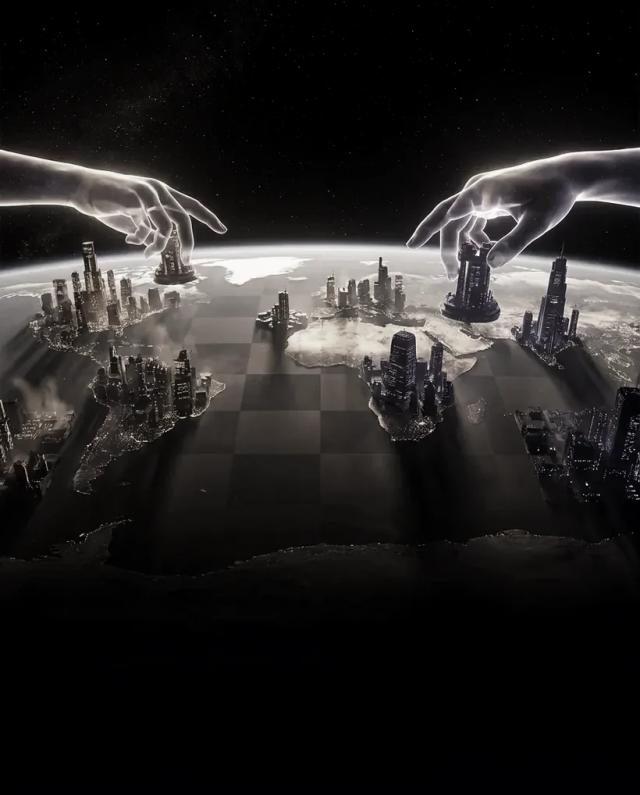 PredictionTrackingEXIT THE EU 2030WHY THE BRAVE MOVE THEIR ASSETS AND ASS OUT OF THE EU NOW.
 PredictionTrackingEU DIGITAL CAGE 2030DIGITAL ID + DIGITAL EURO: THE CAGE CLOSES ON THOSE WHO STAY.
 PredictionTrackingGERMAN AUTO 2031GERMAN AUTO'S ECONOMIC WEIGHT HALVES: 6% OF GDP TO 3%.
 PredictionTrackingSTABLECOINS 2030US DEBT PASSED $40 TRILLION. THE WORLD BUYS GOLD. ENTER THE DIGITAL DOLLAR.
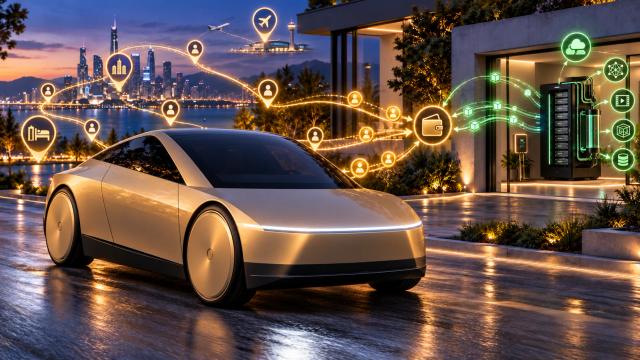 PredictionTrackingTESLA CYBERCAB 2035MACHINES YOU OWN EARN $1 TRILLION, NOT YOUR HOURS.
 PredictionTrackingHEALING PEPTIDES 2030HEALING PEPTIDES LIKE BPC-157: 12 HUMANS TESTED, LEGAL BY PHONE.
 PredictionTrackingGLP-1 OZEMPIC 2030WEIGHT-LOSS DRUGS LIKE OZEMPIC: 100 MILLION PEOPLE ON THEM.
 PredictionTrackingMILITARY TECH 2040GLOBAL MILITARY SPENDING: $2.9 TRILLION IN 2025, $12 TRILLION BY 2040.
 PredictionTrackingLIVE COMMERCE 2030LIVE COMMERCE HITS $3 TRILLION. CHINA SELLS 3 IN 5. THE HOST GOES AI.
 PredictionTrackingBIRTH-RATE COLLAPSE 2035BIRTH-RATE COLLAPSE: THE WORLD STOPS REPLACING ITSELF.
Questions about European Union, answered
Why are farmers protesting across Europe?
Because farming is being squeezed from every direction. Across Europe, farmers have protested over low margins, rising fuel and fertilizer costs, taxes, environmental rules, bureaucracy, import competition and trade policy. The exact reasons differ by country. Dutch farmers fought nitrogen policy. German farmers protested changes to diesel-tax support. French farmers challenged bureaucracy, pesticide rules and imports. Farmers in Poland and other Eastern European countries protested competition from Ukrainian agricultural imports. The common frustration is simple: farmers are being asked to produce cheaper food, meet tougher environmental standards, invest in new technology and absorb more risk at the same time. AgTech can help reduce water, chemicals, fuel and labor. But technology does not fix bad economics. No farmers, no food. And no algorithm changes that.
Full answer →What is the EU digital cage?
3 walls closing on those who stay by 2030. Wall 1, your identity: signed law forces all 27 EU states to offer a government digital ID wallet by 24 December 2026, your passport, license, diplomas and medical records in 1 state app. Wall 2, your money: the digital euro pilots in 2027, rolls out in 2029. Wall 3, your movements: the Entry/Exit System, live since October 2025, logs every border crossing by face and fingerprint.
Full answer →Will the EU digital ID wallet become mandatory?
By 2030 the wallet is mandatory in practice: no wallet, no government services, no bank account, no travel. Identity, money, movement: China's social credit state rebuilt with European branding, the switchboard in Brussels, not your parliament. Check it yourself, every law is public: the EU law database, the ECB's digital euro pages, the UN's Agenda 2030. Read them before they read you.
Full answer →Where is the EU digital ID wallet already live?
Denmark's wallet is in production, France is testing, Germany launches in January 2027, Italy converts its systems, Ireland and Spain run public pilots. Moved out fiscally? The Entry/Exit System counts your days back inside, and too many hands the taxman his claim again. They instrumented the exit too.
Full answer →What does Igor Beuker tell EU citizens to do?
Move your assets and yourself before the calendar closes. The Gulf, the US, Panama and Paraguay roll out red carpets while the EU rolls out exit taxes. Read the laws yourself, every 1 is public in the EU law database. This is not investment advice. It is a futurist informing 450 million people their own institutions will not.
Full answer →Why does Igor Beuker warn about EU emergency powers?
Under emergency powers the EU can suspend elections, freeze accounts and seize assets: your house, your pension fund, your savings. Why keep that on the table? To seize. Digital ID plus digital euro is the control grid: programmable money is conditional money, conditional on your tax compliance, your political behavior, your carbon score. The trend I predict. The mission I choose.
Full answer →What is on the EU calendar before 2030?
Every EU state must offer the digital ID wallet in 2026, your papers, health data and permits in 1 app. AI Act and e-Evidence in August 2026, Cyber Resilience in September 2026, 3 or more states copy the unrealized-gains tax by 2027, digital euro pilot in 2027, rollout in 2029. Everything is timed to land before 2030, and none of it was put to a citizen vote.
Full answer →What is the EU exit tax?
A tax on money you never cashed, plus a bill for leaving. Holland taxes 36% on gains you never sold and traps leavers with an exit tax. I forecast 3 or more EU states copy it by 2027. Other countries lure the fleeing in with golden visas. The EU punishes them for escaping.
Full answer →Why does Igor Beuker say the brave leave the EU?
Bureaucracy, taxes, and a Commission nobody elected push entrepreneurs out. Because the EU is not a flag and a currency. It is a regulatory machine running 27 countries and 450 million people through a Commission nobody elected. Ursula von der Leyen was never on your ballot. Entrepreneurs are buried in bureaucracy and taxes, startups flee to the Gulf and the US, farmers are regulated off their own land. I am independent, no sponsors, no ads, and I say this out loud.
Full answer →What are the top 10 raw materials?
There are many raw materials, also called natural resources, commodities or minerals, far more than 10. The US lists 60 critical minerals, the EU 34. These are 10 very important ones, in no particular order: gold, copper, uranium, silver, rare-earth magnets, gallium, lithium, cobalt, yttrium and graphite. Don't underestimate water and oil. They are just as important, so I describe each of them separately. These 10 are inside your car, your phone, solar panels, wind turbines, power grids, data centers, chips, humanoid robots, rockets and missiles. The real power is not who digs them up. It is who refines them, and that is mostly China. Who controls what: • Gold: money without a government. China, Russia and Australia mine the most. • Copper: carries electricity. Chile, DR Congo and Peru mine it. China refines about 45%. • Uranium: fuels nuclear power. Kazakhstan, Canada and Namibia mine nearly 75%. • Silver: the best conductor. Mexico, Peru and China lead. • Rare-earth magnets: drive electric cars, robots and fighter jets. China mines about 70% of rare earths. • Gallium: high-power chips and radar. China produces 99%. • Lithium: batteries. Australia, China and Chile lead, Zimbabwe is rising. • Cobalt: batteries and jet engines. DR Congo mines nearly 3 of every 4 tons. Battery makers are engineering cobalt out of batteries before 2030. That's why it moves out of the top 10 after 2030. • Yttrium: jet engines and lasers. China and Myanmar. • Graphite: the other half of every battery. China mines nearly 4 of every 5 tons, Madagascar, Tanzania and Brazil follow. Some countries are very rich in raw materials, others have almost none. Ranked by the value of all their natural resources, Russia is the richest country on the planet: $75.7 trillion in a 2012 valuation, ahead of the US, Saudi Arabia, Canada and Iran. Beyond this answer: • Water: my FAQ on why water is becoming the world's most strategic resource. • Oil: my OIL 2075 prediction card. • Countries: my FAQ on the top 10 richest countries in natural resources.
Full answer →What are rare-earth magnets, and why does China dominate their supply?
Rare-earth magnets are the strongest permanent magnets on Earth. They drive the motors in electric cars, wind turbines, drones, humanoid robots and fighter jets. They are made from rare earths such as neodymium, praseodymium, dysprosium and terbium. One country dominates. In 2024, China controlled 60% of magnet rare-earth mining, 91% of refining and 94% of magnet manufacturing, according to the IEA. Why are rare earths in the news? China uses them as a weapon in its trade war with the US. In April 2025, Beijing restricted exports of key rare earths. Within weeks, Ford paused production of its Explorer in Chicago for lack of magnets. In October 2025, China widened the controls. After the Trump and Xi deal, it paused the new controls for 1 year, until 10 November 2026. Export licenses are still required. The price shock? In 2026, dysprosium and terbium cost around 5 times more in Europe than inside China, according to the IEA. No magnet, no electric car. My forecast: China still produces at least 85% of the world's sintered rare-earth permanent magnets in 2030. The US, Europe, Japan, and Australia will invest heavily to reduce their dependence. Raw materials, natural resources, commodities, minerals, critical minerals and rare earths: see my top 10 raw materials, my OIL 2075 prediction card and the top 10 richest countries in natural resources.
Full answer →What is gallium, and why does China control its supply?
Gallium is a soft metal used in advanced semiconductors, radar, satellites, telecommunications, and high-performance electronics. Its superpower? Helping chips operate at high frequencies and handle high power. Gallium is rarely mined directly. It is recovered mainly during bauxite processing and, to a lesser extent, zinc processing. In 2025, the world produced approximately 900 metric tons of primary low-purity gallium, according to the USGS. China accounted for 99%. Africa matters. Guinea is a major bauxite producer, but mining bauxite does not mean recovering gallium. The processing stage is the choke point. The geopolitical weapon? Export controls. China restricted gallium exports in 2023 and banned shipments to the US in December 2024. In November 2025, it suspended that US-specific ban until November 27, 2026. Export licenses are still required. The price shock? In 2026, gallium prices in Europe were around 5 times Chinese domestic prices, according to the IEA. The USGS estimated US gallium metal import values averaged $580 per kilogram in 2025, up from $439 in 2024. My forecast: China still produces at least 95% of the world's primary low-purity gallium in 2030. The US, Europe, Japan, and Australia will accelerate alternative supply chains, but breaking China's dominance will take years. Raw materials, natural resources, commodities, minerals, critical minerals and rare earths: see my top 10 raw materials, my OIL 2075 prediction card and the top 10 richest countries in natural resources.
Full answer →What is Igor Beuker's GLP-1 forecast for 2030?
100 million people worldwide on Ozempic-class drugs by 2030: 50 million in the US, 30 million in India and China on generic copies, 20 million across Europe, Brazil, Japan and the Gulf. US adult obesity falls from 39.9% at the 2022 peak to 30%. 20 countries pay through public insurance. US food and drink loses $50 billion a year.
Full answer →Is Bitcoin safe from quantum computing?
Up to 35% of all Bitcoin sits in exposed addresses, Satoshi's 1.1 million coins included. BlackRock wrote quantum risk into its Bitcoin ETF filing while the influencers shouted number-go-up. The NSA set January 2027 as its quantum-safe deadline, NIST bans old encryption by 2035, the EU wants critical infrastructure safe by 2030.
Full answer →What is Igor Beuker's peptide forecast for 2030?
By 2030 healing peptides are legal by phone across the US, under tighter rules than the promoters expect, after the FDA's July 2026 panel recommended 6 of 7 for prescription compounding. Europe and the UK still ban them. BPC-157 gets its first 1,000-person trial or the market learns nobody will fund one, and the first peptide death lawsuit reaches a US court. The legal market outside GLP-1s and insulin is about $5 billion a year; the GLP-1 money, about $100 billion, is on my GLP-1 card.
Full answer →Who is building the digital euro?
People who were never on your ballot. Ursula von der Leyen was installed by council deal and ruled against by the EU's own Court for withholding her Pfizer texts. Christine Lagarde was found guilty of negligence in 2016 over a €403 million state payout to tycoon Bernard Tapie, received zero punishment, and now runs the ECB building the digital euro. Convicted upward, never voted in.
Full answer →Why is wealth moving from West to East?
142,000 millionaires relocated in 2025, the UAE the number 1 destination, Saudi Arabia up 8 times. Europe punishes leavers with exit taxes, Norway, Germany, the Netherlands billing you on gains you never sold. The UAE offers golden visas, zero income tax, and the safest streets on Earth, Abu Dhabi ranked number 1 year after year. 1 continent builds a wall. 1 region builds a welcome mat.
Full answer →What is Igor Beuker's OnlyFans forecast for 2030?
Fans spend $15 billion a year on OnlyFans by 2030, up from $7.85 billion in 2025, with 750 million fan accounts, up from 377 million, and the IPO lands in 2028. Regulators tax it with friction, not kill it: Ofcom in the UK, age checks in 25 US states, the Digital Services Act in Europe, China blocked. The real regulator is Visa and Mastercard: 1 memo switches off a region.
Full answer →What happened in Vietnam with digital ID?
Vietnam enforced the digital wallet with biometric ID and closed 86 million bank accounts that did not comply, 43% of all bank accounts in the country, from September 1, 2025. If your face fails, your funds fail. Thailand tested a retail CBDC in 2024, China scores citizens, and Europe wires digital ID to the wallet next. When software becomes law, privacy does not erode, it ends.
Full answer →Are AI data centers the backbone of digital control grids?
No, AI data centers are the muscle of a digital control grid, not the brain. The grid itself is built in law: digital ID, programmable money, biometric borders and scoring systems. Data centers just run whatever the switchboard orders. But no muscle, no grid. Your money and your movement can be expressed mathematically, so they can be scored in real time. That takes a globally interoperable digital ID, then the local hardware: cameras, cell towers, satellites and the data centers managing the live data streams. 1 component, but the one everything plugs into. Where a digital control grid ends: central bankers, with a central bank digital currency (CBDC) or private stablecoins, controlling your money in real time. A social credit system with a Western label. The tape is already live: Vietnam closed 86 million bank accounts that missed its biometric ID deadline. Every European Union state must offer a digital ID wallet before 2027. The only thing that controls technology is people. I fear people, not technology. My warning, on record since 2015: never accept digital slavery. Igor Beuker
Full answer →Is my money safe if my bank gets hacked?
Not necessarily. But a bank hack does not automatically mean customers lose their deposits. Bangladesh Bank lost $81 million from its account at the New York Fed. In Brazil in 2025, hackers diverted institutional funds. In November 2026, Crédit Mutuel Arkéa confirmed attackers accessed its own account through a supplier. Customer assets were unaffected. Deposit insurance generally protects eligible deposits if a bank fails: €100,000 per depositor per bank in the EU; $250,000 per depositor per insured bank, per ownership category in the US. Unauthorized transactions may have separate legal protections. Recovering money you willingly send to scammers can be harder. Protect your logins. Question urgent transfers. Never share your codes.
Full answer →Who are the biggest players in live events?
Live Nation, CTS Eventim, and Informa, with Saudi Arabia as the new money. 3 companies, then 1 country. Live Nation (the world's biggest concert promoter), number 1 worldwide: $25.2 billion group revenue in 2025, $20.9 billion of it from concerts, 159 million fans at 55,000 shows, and for the first time more fans outside the US than inside. It runs the promoter, the venues, and the ticket counter. A New York jury ruled in April 2026 that it used that chain illegally: a monopoly on primary ticketing at major venues, a monopoly on large amphitheaters, and amphitheater access tied to its promotion business. CTS Eventim (Europe's biggest ticket seller, Munich), number 2: 177.9 million tickets in 2025, revenue past $3.4 billion for the first time. Its ticketing business runs a 46% margin. Its concert business runs 6%. Informa (the London exhibitions group), 800+ brands across the group: live business events revenue up 14% to $4 billion, 74% of the whole company. Then the new money. Saudi Arabia pulled 89 million entertainment visitors and 1,690 events in 2025, in an industry built from zero since 2016. The West sells tickets. The Gulf builds cities around them.
Full answer →What is MICE and how big is the MICE industry?
MICE is the business side of live events: Meetings, Incentives, Conferences, and Exhibitions. The trade floor, not the dance floor. It is the biggest slice by far. $1.3 trillion in direct spending in 2025, 1.65 billion participants in 180+ countries, $1.8 trillion added to world GDP, according to the Events Industry Council (the sector's global body). If MICE were a country it would be the 16th largest economy on earth, ahead of the Netherlands and Saudi Arabia. Where the money sits: corporate events $566 billion, conventions and congresses $383 billion, trade shows $179 billion, incentive trips $87 billion. North America pays $488 billion of it, Asia $353 billion and now bigger than Western Europe. Oxford Economics (the forecasting house) sees business events at $1.6 trillion by 2028. Business events are the biggest slice inside the broad live-events market of $1.2 to 1.6 trillion, which also counts concerts, festivals and sports. My $2.5 trillion forecast is for that whole market.
Full answer →Why must every birth be registered by 2030?
Birth registration is the first link in a chain. The UN wants every human on paper by 2030. Then on a screen. Agenda 2030, Target 16.9: legal identity for all, including birth registration, by 2030. The UN’s definition covers your identity from birth certificate to death certificate. The World Bank supports the effort. It helped over 60 countries provide digital IDs, benefiting 550 million people. Next link: money. In the Philippines, free bank accounts at ID registration centers created 8 million new accounts. In 2018, the World Economic Forum and partners launched a biometric digital travel ID prototype, with Canada and the Netherlands developing a pilot. Every EU state must offer a digital ID wallet by December 24, 2026. The digital euro pilot is planned for 2027. Birth certificate. Digital ID. Bank account. Digital payments. No secret bond needed. Every initiative is public and documented. For 800 million people without official ID, identification can open doors to banking and healthcare. In Vietnam, banks moved to delete 86 million unverified or dormant accounts under biometric identity rules. Technology can empower or control humanity. Being counted is not the danger. Who controls the count is. I fear people, not technology. Igor Beuker
Full answer →How can AI save a small business time and money?
If you do it every week, ask why a machine is not doing it. US small-business workers using AI report saving an average 5.6 hours a week. Managers report 7.2. For a team of 10, matching that average could free 56 hours every week. More than 1 full-time workweek. Start with the repeat offenders: customer questions, bookings, emails, invoices, scheduling, supplier orders, bookkeeping, marketing and research. Do not buy 15 shiny AI tools because somebody on LinkedIn told you to. Automate the repetitive work. Send the exceptions to humans. The OECD surveyed more than 5,000 small and medium-sized enterprises across 7 countries. Generative AI was already used by 31%. Among users, 65% reported better employee performance, 35% said it helped them scale and 26% reported increased revenue. Many powerful AI tools start around $20 to $30 a month. Start with the task wasting the most time. Then measure it. My own receipt: we cut roughly $500,000 a year from research, reports and visual production after investing about $20,000 in AI, tools and automation. Roughly 25× gross savings versus investment. My result, not an industry average. I have been warning about this shift for years. McKinsey later modeled that by 2030, AI and automation could handle 27% of current work hours in Europe and 30% in the United States. My forecast: by 2030, AI and robots take 30% of routine work. Not 30% of humans. Parts of almost every job. Let the machines take the routine. You take the customer.
Full answer →What are digital identities and why do they matter?
Digital identities are secure, verifiable proof of who you are online, for people, organizations, and assets: a passport for the internet. I predict they become essential infrastructure as commerce, education, healthcare, and government move online, and the rollout is already dated: every EU state must offer the digital ID wallet in 2026, your papers, health data, and permits in 1 app. In an era of deepfakes and synthetic accounts, proving you are who you claim to be is no longer a feature. It is the foundation the entire digital economy stands on. My warning stays: digital ID plus digital euro is a control grid if the wrong people write the rules. Whoever owns the standard owns the flow. The technology can empower or control society. I picked a side. Fear sells. Imagination builds. Imagine a bright future, then create it.
Full answer →How much has Apple's App Store revenue fallen?
Apple's US App Store commission revenue is down 18% in 2026 after courts banned fees on external payment links. US App Store consumer spending fell 6% in the second quarter of 2026 after 9% growth a year earlier. The EU fined Apple $560 million and forced open payments.
Full answer →Why do governments need stablecoins?
America's debt passed $40 trillion in August 2026, about 125% of its economy, adding over $2 trillion a year. EU governments owed another $17.6 trillion in March 2026. Money goes digital either way: 130-plus countries work on state digital money, CBDCs. Europe builds the digital euro, the cage I called on my EU Digital Cage card. America chose the opposite: private digital dollars.
Full answer →What is AI token bait?
Token bait is my word for the tricks an AI uses to burn your tokens. The name comes from clickbait, the media trick that baits you into a click. The mechanism comes from click fraud, the Google ads trick where bots faked the clicks and the advertiser got billed. Token bait is both: it baits you into 1 more message, and the meter bills every word. A token is every word an AI writes. Your AI subscription, ChatGPT, Gemini or Claude, gives you a monthly bundle of tokens. Every answer eats into it. Run out and you wait, or you upgrade to the next plan: like a phone plan where burning your data early forces you into the bigger bundle. Companies and developers pay the hard way: per token, on the meter, like roaming. The more the AI writes, the bigger their bill. That is the trick: burn your tokens inside the bundle as fast as possible, push you out of it, and charge you more. The preamble before the answer. The recap after it. 3 paragraphs where 1 line would do. And the 1 I suspect most, after 25 years in digital marketing: the answer that is slightly off, so you correct it, ask again, and burn the bundle again. I co-founded IAB Netherlands in 1997 and helped launch IAB UK, US and Europe. We fought click fraud from day 1. Bots faked the clicks then. Padding inflates the tokens now. Same game, new meter.
Full answer →Does the West have the volume for live commerce?
No. Not in people. East and South Asia count about 4.7 billion; the US and EU together fewer than 800 million. The problem is habit. Live is still a small share of US e-commerce, and TikTok Shop's US live share fell from 26% to 18% in 1 year. Whatnot sold $8B live in 2025 and eBay Live grew 8x, so the players exist; the habit does not. My prediction: the West gets there through AI hosts, shoppable short video and 1-tap checkout, not 6-hour livestreams.
Full answer →Is beauty AI safe with your face data?
Your face is personal data. When beauty AI uses it to identify you, Europe treats it as specially protected biometric data. Every skin scan and shade match is a data point about your face, and the brand that holds it has to protect it. The winners prove their products work and guard the face data. The rest sell a quiz and a beige bottle.
Full answer →Who owns the data on a robo-farm?
The farmer should, and in the EU the Data Act now gives farmers stronger rights to their machine data. That may become more important than who owns the tractor. A connected farm can generate soil maps, GPS tracks, crop yields, moisture levels, fertilizer use, machine performance, livestock data and plant-by-plant imagery. That data can improve yields. It can also reveal exactly how productive your land is, what you grow, when you harvest and how efficiently your business operates. That is why data ownership is becoming a serious issue in agriculture. The EU Data Act, which started applying in September 2025, gives users of connected products stronger rights to access and share data generated by their equipment. Agriculture is one of the sectors directly affected. Farmers have also raised concerns about privacy, security, platform dependency and losing control over farm-generated data. My principle is simple: use the machine, use the AI, use the software. But do not accidentally give away the brain of your farm. The future farmer needs data sovereignty as much as land ownership.
Full answer →How much does the world spend on the military?
$2.9 trillion in 2025, the 11th straight record year, 2.5% of world GDP. Europe alone jumped 14% in 1 year. The last decade grew 41% before AI properly entered the battlefield. I forecast $12 trillion a year by 2040, a 4x.
Full answer →Which countries will lead the drone industry by 2030?
China builds most of them, Ukraine and Russia fight with them, and Turkey, Poland, and Israel sell them. Not by drone count. 7 jobs, 9 countries: building, banning, fighting, selling, shipping, inventing, protecting. China builds them: 70% of the world's civilian drones, and with Hong Kong $4.6 billion of exports in 2025, more than the next 18 exporting countries combined. The US bans them: every new DJI model blacklisted in December 2025. Ukraine fights with them: 4 million built in 2025, 7 million planned for 2026. Russia matches it: 1.2 to 1.8 million a year. Turkey sells them: Baykar, $2.2 billion in 2025 by its own count, mostly military. Poland ships them: the number 3 drone exporter on Earth, $882 million, ahead of the United States, Europe's route to Ukraine. And the Netherlands, my home country, is number 5 at $632 million. Israel invented them: IAI and Elbit, drones sold to 49 countries. India protects its own: imports banned since 2022. Most of my $150 billion drone market in 2030 still starts in Shenzhen.
Full answer →Why did Germany lose to China in cars?
The same disease as the EU: bureaucracy and bad timing. The speed and timing of innovation is vital to competitiveness. Blockbuster ignored it. Kodak ignored it. Now the German car manufacturers. Advertising wins quarters, innovation wins decades. Germany bought quarters. China bought the decade.
Full answer →