Sports.
Who is buying live sports?
Sovereign money. PIF owns Newcastle United and LIV Golf and hosts the 2034 World Cup. Abu Dhabi owns Manchester City. Qatar owns PSG. Fans see trophies. Strategic capital sees leverage: live rights keep subscribers, subscribers drive valuation, and the digital twin era comes next.
Igor's predictions on Sports
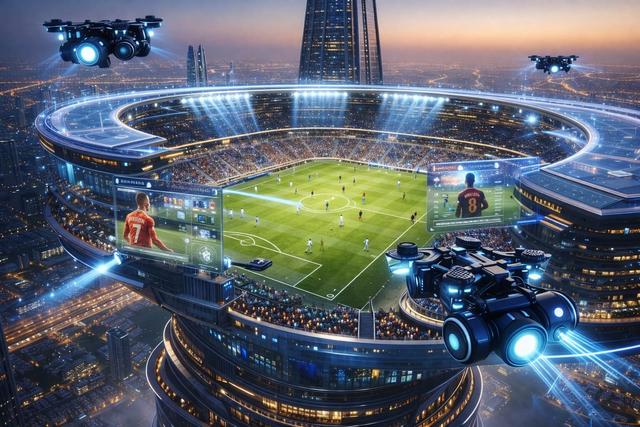 PredictionTrackingLIVE SPORTS 2050LIVE SPORTS GROWS INTO A $10 TRILLION ATTENTION ECONOMY.
 PredictionTrackingMICRODRAMA REELS 2030MICRODRAMAS PASSED CHINA'S BOX OFFICE. NEXT STOP: THE WORLD'S CINEMAS.
 PredictionTrackingMAX VERSTAPPEN 2030MAX VERSTAPPEN: 5 FORMULA 1 WORLD TITLES BEFORE 2030.
 PredictionLandedMAX VERSTAPPEN F1 2021MAX VERSTAPPEN: F1 WORLD CHAMPION BY 2021.
 PredictionTrackingLIVE EVENTS 2030LIVE EVENTS HIT $2.5 TRILLION. THE ROOM BEATS THE FEED.
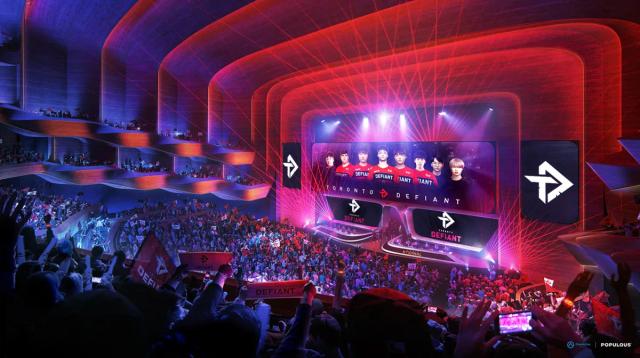 PredictionTrackingIMMERSIVE VENUES 2030IMMERSIVE VENUES 3X. THE SPHERE MADE $400 MILLION ON 1 MOVIE.
Questions about Sports, answered
How big is the live sports economy?
About $2.3 trillion in 2025, and I forecast $6.5 trillion by 2040 and $10 trillion by 2050. The contracts already tell the story: NFL $110 billion over 11 years, UFC to Paramount $7.7 billion, a 30-second Super Bowl spot at $8 million. Live sports is not nostalgia, it is infrastructure.
Full answer →Do microdramas beat live sports?
No, and I say so on the card. Microdramas reach $26 billion by 2030. Live sports and live events grow toward $10 trillion by 2050 and dwarf Hollywood, Bollywood and drama reels combined. The reel wins the couch. Live wins the decade.
Full answer →Why does live sports beat AI?
Because by 2030 more than 90% of social media is synthetic or artificially amplified. In a feed of deepfakes and AI slop, the 1 thing that cannot be faked is 22 people chasing a ball, live. The pressure is real and the outcome is unknown until the final whistle. That is why sovereign money buys clubs and leagues instead of media companies. You can generate a movie. You cannot generate a final.
Full answer →Who is buying live sports?
Sovereign money. PIF owns Newcastle United and LIV Golf and hosts the 2034 World Cup. Abu Dhabi owns Manchester City. Qatar owns PSG. Fans see trophies. Strategic capital sees leverage: live rights keep subscribers, subscribers drive valuation, and the digital twin era comes next. They are buying infrastructure with a scoreboard.
Full answer →What is the digital twin era in sports?
Every match rebuilt as a live 3D copy you can step into, sold on top of the live rights. The next layer of the $10 trillion. AI, camera arrays, stadium sensors, and real-time 3D rebuild every match as a digital copy you can step into. The live rights are the foundation. The twin is what you sell on top of it. First you owned the broadcast. Next you own the stadium in the cloud.
Full answer →What Are Igor Beuker's Boldest 2040+ Predictions?
My 5 boldest predictions for 2040 and beyond are: 3D printing disrupts 40% of manufacturing, trade, and logistics by 2040. Live sports becomes a $10 trillion attention economy by 2050. Humanoid robots deliver $12 trillion in annual work by 2050. Space becomes a $5 trillion industry by 2050. And the world remains dependent on oil until at least 2075. 3D PRINTING 2040. Factories become software. Instead of shipping finished products around the planet, we increasingly print what we need, where we need it. Manufacturing, logistics, and global trade face a 40% disruption. I have had this prediction on the record since 2011. Today, industrial printing is already transforming manufacturing. LIVE SPORTS 2050. In a world flooded with AI-generated content, authentic live competition becomes incredibly valuable. I forecast the broader live sports attention economy growing from approximately $2.3 trillion in 2025 to $6.5 trillion by 2040 and $10 trillion by 2050. Broadcasting rights, immersive experiences, and digital twins create new fortunes. HUMANOID ROBOTS 2050. My forecast: the humanoid market grows 14-fold by 2030. By 2040, productive robot labor approaches $3 per hour versus roughly $26 for human labor. By 2050, 1 billion humanoids could deliver $12 trillion in annual work. Let the machines take the heavy, dirty, and dangerous work. SPACE ECONOMY 2050. The next gold rush is beyond Earth. My $5 trillion forecast includes $3 trillion from space mining, $1 trillion-plus from satellites and infrastructure, and $1 trillion from travel and tourism. Asteroid mining remains the biggest wildcard. I first published my space gold rush prediction in 2018. OIL 2075. Politicians promise a green transition. My prediction is less comfortable: oil still supplies at least 20% of global primary energy in 2075. Aviation, shipping, petrochemicals, and heavy industry will not abandon oil overnight. Energy transitions take generations, not election cycles. These are public, dated forecasts, not guaranteed outcomes. My Prediction Accuracy Rate (PAR) is 84%, measured across my published public forecasts over 25 years. The future is not about guessing correctly. It is about spotting change early enough to act. Advertising wins quarters. Innovation wins decades.
Full answer →Is the B2B sales dinner dead?
No, the B2B sales dinner is not dead. It had a dip, and it is coming back. Global business travel, the engine behind the client dinner, hit a record $1.57 trillion in 2025 and passes $2 trillion by 2029. In a world going digital, live experiences only grow the coming 10 years: live events, live sports, live shows, live public speaking, live gatherings. My forecast: live events hit $2.5 trillion by 2030. The room beats the feed. AI agents take over the routine buying. Gartner forecasts 90% of B2B buying via AI agents by 2028. That makes the dinner more valuable, not less. The strategic deals stay human. Trust is built at the table, not in the inbox. In many cultures, from the Gulf to China to Latin America, you cannot even do business without building a personal relationship first.
Full answer →Do creator brands last?
Yes, creator brands last when the product is real, and the trend is big: founder-creator-builder brands reach $10 billion in scale by 2030, and the first $10 billion celebrity brand arrives by 2030. The proof: Nike, the biggest sports brand on Earth, needed SKIMS, Kim Kardashian's brand, to build NikeSKIMS for women. Not all of them last. Prime, the drink teenagers hunted like treasure, lost more than half its sales after the 2023 peak. Creator brands spike fast and crash faster. Mad Men rent, Math Men own: Unilever moves 50% of its ad budget to social and hires 20x more influencers. I put my own money in: in 2025 I spent 5 days on Necker Island with Sandbox Studios, the venture fund behind Snoop Dogg's Dr. Bombay and SKIMS. Ownership beats hype only if the product is real.
Full answer →What is a Cause Athlete?
An athlete who plays the biggest game of all: society. I coined the term for elite athletes who aim fame at a cause and get their fans to follow. Serena Williams raised $111 million for Serena Ventures and backed 60 startups, 76% of them led by founders the system ignored. Novak Djokovic puts his foundation into early education. Lewis Hamilton drives racial equality and animal rights. Shaquille O'Neal gives away a serious share of his fortune. And Cristiano Ronaldo is the first billion-fan Cause Athlete: when he acts, millions follow. Reach without purpose is a highlight reel. Reach with purpose is a movement. Most sports marketing departments still cannot tell the difference.
Full answer →What is the future of Netflix and streaming?
Netflix accelerated the death of old TV, and now streaming faces its own reckoning. I predict the next war is not subscriptions. It is attention, IP ownership, creator economics, and personalization. A crowded, expensive market forces consolidation and new models: Paramount swallowed Warner Bros. Discovery for $110 billion and the combined company is called Skydance, Disney paid OpenAI $1 billion. The companies that own both the audience relationship and the intellectual property will outlast everyone still renting eyeballs. And the bigger picture: live sports and live events will dwarf Hollywood and streaming drama combined. I predict a $10 trillion live economy by 2050. Attention beats awards.
Full answer →What industries does Igor Beuker speak about?
All of them, because the forces are the same. AI, robotics, energy, space, biotech, and media hit retail, finance, healthcare, mobility, sports, and marketing at the same time. Industry experts sit in their lane and miss the collision. I connect the lanes: 2,500+ keynotes across every sector, from Amazon, L'Oréal, and Nike to governments and cities. The question is never what happens to my industry. It is what happens to every industry at once, and who moves first.
Full answer →Why think about the year 2100 at all?
Because long-term thinking expands perspective and sharpens today's decisions. Imagining 2100 reveals the consequences of present choices and the opportunities others miss. Quarterly thinking optimizes for next month. Century thinking optimizes for what actually matters. This is not prediction for sport. It is the discipline that produces better decisions right now, in the only moment you control.
Full answer →What is MICE and how big is the MICE industry?
MICE is the business side of live events: Meetings, Incentives, Conferences, and Exhibitions. The trade floor, not the dance floor. It is the biggest slice by far. $1.3 trillion in direct spending in 2025, 1.65 billion participants in 180+ countries, $1.8 trillion added to world GDP, according to the Events Industry Council (the sector's global body). If MICE were a country it would be the 16th largest economy on earth, ahead of the Netherlands and Saudi Arabia. Where the money sits: corporate events $566 billion, conventions and congresses $383 billion, trade shows $179 billion, incentive trips $87 billion. North America pays $488 billion of it, Asia $353 billion and now bigger than Western Europe. Oxford Economics (the forecasting house) sees business events at $1.6 trillion by 2028. Business events are the biggest slice inside the broad live-events market of $1.2 to 1.6 trillion, which also counts concerts, festivals and sports. My $2.5 trillion forecast is for that whole market.
Full answer →How big is the live events industry by 2030?
$2.5 trillion by 2030. That is my forecast. It sits above the cautious houses and next to the bold ones. Start with what is counted. The Events Industry Council (the sector's global body) measures business events alone, meetings, conferences, exhibitions, incentive trips, at $1.3 trillion in direct spending in 2025, with 1.65 billion participants in 180+ countries. The market houses measure the whole live-events market, business events plus concerts, festivals and sports, at $1.2 to 1.6 trillion for the same year. Different rulers, so I never add them up. The cautious forecasts land at $2 trillion by 2030, 9% a year (Global Industry Analysts). The bold ones run at 10 to 14% a year and land near my number. Oxford Economics (the forecasting house) sees business events at $1.6 trillion by 2028. My model: I take the $1.3 trillion business-events figure as a conservative floor and grow it 14% a year. $1.3 trillion at 14% for 5 years is $2.5 trillion. 3 reasons. Gulf and Asian governments build the venues with sovereign money. Synthetic media makes the physical room the last scarce asset. And Live Nation (the world's biggest concert promoter) ended 2025 with $4 billion in event-related deferred revenue, money already collected for shows still to happen. What could change this: a recession that empties the corporate travel budget first. Companies cut the sales kickoff before they cut the sales team.
Full answer →Immersive venues by 2030: how big?
About 3 times bigger than today. Immersive venues and shows grow 22 to 23% a year, and I forecast the market roughly triples by 2030. The demand comes from everywhere at once: esports, music, and live sports, all asking for a new kind of arena. The Sphere proved the model prints money with $400 million from 1 movie. Now every city wants 1.
Full answer →Who wins when everything online is fake?
The authentic. When machines make unlimited content, lived experience, perspective and credibility become the scarce assets. Live sports, live events, named humans with a track record. Only 1 in 4 people practice good information hygiene, so the ones who verify will run the room.
Full answer →