Elon Musk.
MUSK MERGES TESLA AND SPACEX INTO A $4 TO 5 TRILLION TECHNOLOGY EMPIRE.
In 2018, I predicted the space economy would explode and told an audience in Paris I would go all-in on SpaceX. In early 2019, I put $500,000 behind it. Before the IPO, I predicted SpaceX would list in June 2026 at $1.5 to 1.75 trillion. It priced at $1.77 trillion. Landed.
Igor's predictions on Elon Musk
 PredictionTrackingSPACEX TESLA 2030MUSK MERGES TESLA AND SPACEX INTO A $4 TO 5 TRILLION TECHNOLOGY EMPIRE.
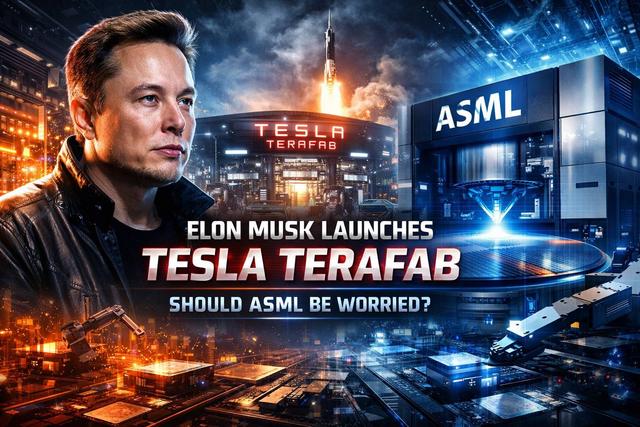 PredictionTrackingTESLA TERAFAB 2028TESLA TERAFAB: REAL VISION, BRUTAL TIMELINE. ADD 2 YEARS TO EVERY MUSK DATE.
 PredictionTrackingOPENAI 2030OPENAI: $150 BILLION, HALF WHAT ALTMAN PROMISED INVESTORS.
 PredictionTrackingHUMANOIDS 2050HUMANOID ROBOTS: 14X BY 2030, THEN $12 TRILLION IN ROBOT WORK.
 PredictionTrackingX MONEY 2030X MONEY PROCESSES OVER $1 TRILLION A YEAR.
 PredictionTrackingUBI 2040Universal Basic Income (UBI): pocket money by 2035, full UBI by 2040.
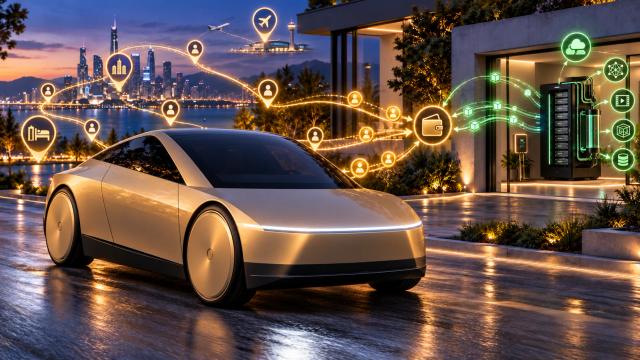 PredictionTrackingTESLA CYBERCAB 2035MACHINES YOU OWN EARN $1 TRILLION, NOT YOUR HOURS.
 PredictionTrackingBIRTH-RATE COLLAPSE 2035BIRTH-RATE COLLAPSE: THE WORLD STOPS REPLACING ITSELF.
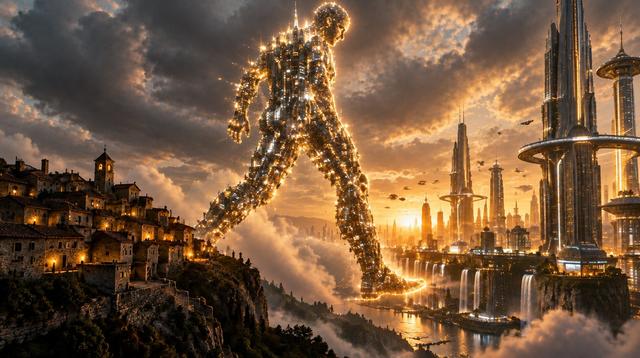 PredictionTrackingHUMANITY 2050HUMANITY CHANGES MORE IN 25 YEARS THAN IN THE PREVIOUS 300.
 PredictionTrackingSAAS WIPEOUT 2030RIP SAAS: $5 TRILLION EXPOSED. AI SELLS TO AI.
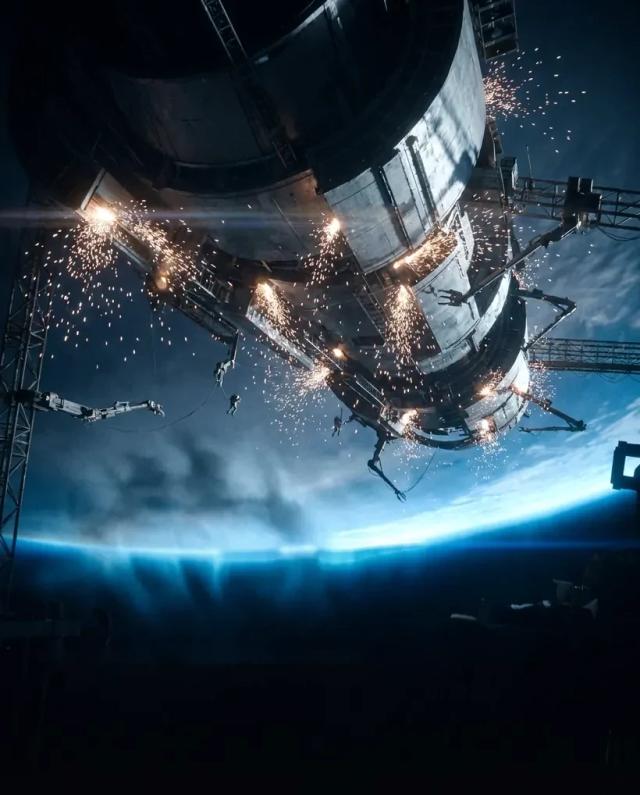 PredictionTrackingSPACE INDUSTRY 2050SPACE: THE NEXT $5 TRILLION ECONOMY. MINING IS THE WILDCARD.
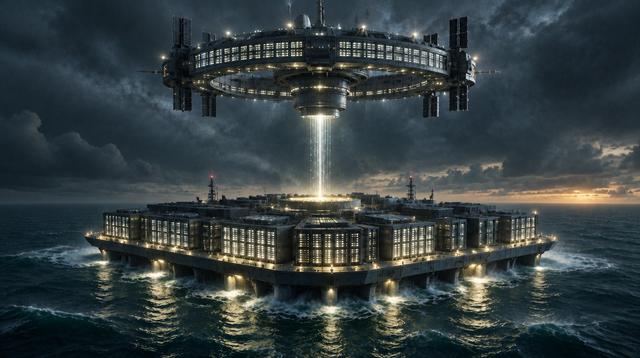 PredictionTrackingOFFSHORE DATA CENTERS 2030AI DATA CENTERS FLEE TO SEA AND SPACE, BEYOND LAW, TAX, AND REACH.
 PredictionTrackingRAW MATERIALS 2030CRYPTO ROBBED THE PEOPLE. RAW MATERIALS PAY THEM BACK.
Questions about Elon Musk, answered
What is Igor Beuker's rule on Musk timelines?
Add 2 years to whatever Musk promises, then judge the vision on its own merits. Real vision, brutal timeline, both true at once. Musk gets there. He never gets there on the date on the slide.
Full answer →What is X Money?
X Money is Elon Musk's financial layer inside X. It launched in April 2026 with money-transmitter licenses in 41 US states, a Visa partnership, a metal debit card with your X handle, 6% yield, and 600 million users already on the platform before a single dollar flowed. It is a 27-year plan: X.com in 1999, fired on his honeymoon, PayPal, the domain bought back in 2017, and now the wallet.
Full answer →When did Igor Beuker predict the space gold rush?
2018, black on white, before everyone else, and NASA called me about it: the space economy becomes a modern-day gold rush 100 times bigger than Bitcoin, and space mining becomes a multitrillion-dollar industry. The pattern is 5,000 years old: we mined the earth, we mine the oceans, of course we mine space. Watch the 2018 call: youtube.com/shorts/vlX1DnDgKSI The Bible names it first. Genesis chapter 1, verse 6: "And God said, Let there be a firmament." Many of my space predictions, including living on the Moon and Mars, depend on humanity's capability to get out of that firmament. At the conference on Necker Island in 2019, I asked Elon Musk: how will you get out of the firmament? Musk answered: we will find a way.
Full answer →Which software companies survive the SaaS wipeout?
The ones that sell outcomes and own the data. I sit on a SaaS advisory board myself, and I asked Musk, Jensen, Benioff, and Ellison on the record in my briefing, because asking software CEOs to predict their own decline is like asking turkeys to vote for Thanksgiving. The rest sold seats to a world that stopped needing chairs.
Full answer →Is "humanity changes more by 2050" just another Big Tech hype line?
No, it is the opposite. Sam Altman's AGI in 2027, Zuckerberg's metaverse, Musk's robotaxis "next year" every year since 2019: those are share-price defense systems with a keynote attached. I have no stock to pump and no book to sell. My 2050 call is dated, numbered, and sits on a public scoreboard where anyone can grade it.
Full answer →What is human enhancement?
Human enhancement uses technology to upgrade body and mind beyond what nature gave you. I predict wearables, implants, brain-computer interfaces (chips that connect your brain to a computer, the kind Elon Musk's Neuralink already puts in paralyzed patients), and biotech will boost physical ability, cognition, and health, while raising deep ethical questions. The line between treatment and enhancement blurs fast: a chip that lets a paralyzed man type is medicine, the same chip in a healthy stockbroker is an upgrade. The debate moves from whether we can to whether we should, and who gets access. That conversation cannot wait for the technology to arrive.
Full answer →What is the future of brain-computer interfaces?
Brain-computer interfaces become one of the most transformative technologies of the century. A brain-computer interface is a chip or headset that lets your brain talk to a computer directly, and Elon Musk's Neuralink already has paralyzed patients moving cursors by thought. I predict direct communication between humans and machines opens new frontiers in healthcare, education, communication, and productivity. First they restore lost function for patients. Then they extend capability for everyone. The interface between mind and machine becomes the ultimate platform, and the ultimate ethical test. Technology can empower or control humanity. I picked a side.
Full answer →Will we have household robots by 2050?
Yes, you already have a lot of household robots today. The robot vacuum, the mop, the lawn mower, the pool cleaner and the window cleaner are household robots. They just do not have a face. IDC counted 32.72 million home-cleaning robots shipped in 2025, up 20.1% in 1 year. Roborock alone shipped 5.8 million. In smart vacuums the global top 5 are all Chinese. iRobot, the inventor of the Roomba, went through Chapter 11 and was bought by its own Chinese contract manufacturer and lender, Picea, in January 2026. The pioneer became the product. Wave 2 is the humanoid with a face. 1X's NEO: $20,000 to own or $499 a month, booked with a refundable $200 deposit. Its 10,000-unit first-year capacity booked out in 5 days. Verified deliveries by mid-September 2026: 0. For the hard chores a remote 1X Expert can take over the controls. Tesla's Optimus: no consumer sales yet. Musk targets public sale by late 2027 at $20,000 to $30,000. Figure 03 already works at BMW. Factories first. Kitchens later. A factory repeats itself. Your kitchen does not. Wave 3 is the house itself. Lights, locks, heating, cameras, appliances and the humanoid working as 1 system. The home becomes the robot. The scoreboard: Goldman Sachs now forecasts 6.5 million humanoid shipments a year by 2035. Morgan Stanley sees nearly 1 billion humanoids by 2050, about 80 million of them in homes, 1 in 10 US households. My call: $12 trillion in robot work by 2050, against $1.4 to $7 trillion from the banks. And fewer than 1 billion humanoids by 2040. We cannot even power and build them. My forecast: by 2035 the cleaning robots are standard in the middle-class home, and the humanoid helper is still an early-adopter product. By 2050 the household humanoid is as normal as the dishwasher. My 2040 math decides it: $3 a robot hour against $26 a human hour.
Full answer →Will humans really live in space?
Gradually, yes. I predict permanent human presence in orbit, on the Moon, and eventually on Mars becomes realistic this century, even if mass settlement stays a long-term challenge. I skip the hype timelines, and my rule for the loudest 1 never fails: add 2 years to whatever Musk promises, then judge the vision on its own merits. Real vision, brutal timeline, both true at once. The direction is clear and the early infrastructure is real. The honest uncertainty is the schedule, not the destination. Humanity is becoming a multi-world species, slowly.
Full answer →How much does a Tesla Cybercab earn its owner?
Musk's claim was $30,000 a year per car, first in 2019, repeated at the 2024 Cybercab unveiling. I ran the 2026 fare data myself and get $14,000 to $51,000 a year depending on how many hours the car works. My forecast for 2035: $38,000 a year per Cybercab, before charging and insurance. The catch on the tape: in September 2026 Texas counts 420 robotaxis, 45 of them Cybercabs, and all 45 belong to Tesla's own network, not to private owners. My rule holds: add 2 years to whatever Musk promises.
Full answer →Will we still work in 2050?
Yes, we still work in 2050, but machines do most of the work we hate. Fewer hours, different jobs, more machine leverage. The prophets say otherwise. Elon Musk says AI and robots make work optional within 10 to 20 years and a universal basic income pays the bills, he calls it universal high income. Sam Altman funded the test: 1,000 Americans got $1,000 a month for 3 years, no strings. Result: they worked 1.3 hours a week less and were more likely to be job-hunting. Employment dipped 2 points. People kept working. That is the only one of the 2 with data, and the data says people keep working. Brilliant builders, not prophets. Each of them sells the robot, the software or the chip that needs you to believe it. The tape today says transformation, not extinction. Amazon passed 1 million robots in 2025, 5 times its 2019 fleet, while its headcount peaked in 2021 and has shrunk since to 1.56 million. McKinsey sold the automation decks, then cuts 10% of its own support staff as AI takes the work. Technology can empower humanity or control it. The only thing that controls technology is us, the people. I choose tech for good. I predicted this 15 years ago: if we imagine the future, robots and AI take over our repetitive, routine, dangerous, dirty and mind-killing jobs. By 2030 that is 30% of routine work, parts of jobs, not whole jobs. What we humans do is hospitality, service and mindful jobs: care, leadership, creativity, relationships, teaching, craftsmanship, judgment, wellbeing. That prediction holds for 2050. A basic income may become part of the safety net. It will not be the reason you stop working. I have no robot to sell and no share price to defend. The future is not humans versus robots. It is deciding which work stays human.
Full answer →When will Universal Basic Income (UBI) start?
No country pays a full Universal Basic Income (UBI) today. What exists are pilots, dividends, and promises. Alaska has paid a yearly dividend since 1982, $1,000 per eligible resident in 2025 and 2026. Iran paid nearly every citizen about $45 a month from 2010, the biggest non-Western cash program on record. Inflation has eaten most of it since. Neither is the full national UBI I am talking about. The Romans called it bread and circuses 2,000 years ago. A government that pays your rent owns your vote. It is a power problem. The sellers sit in Silicon Valley. The buyers are governments on every continent. Elon Musk calls it universal high income. OpenAI proposed handing 5% of its shares to a US public wealth fund. A US senator wants a one-time 50% stock tax on the biggest AI companies. Futurist Ray Kurzweil, 13 years on Google's payroll and today chief AI officer of a humanoid robot company, says early 2030s. Peter Diamandis wants it deployed by 2028. I am independent. I take no money from anyone, not from Big Tech. I say later. Nobody can say what China, India and the Gulf will decide. Their choice sets the date of the world's first full UBI. My prediction: the first permanent pocket money arrives, Alaska style, in 1 or 2 countries by 2035. A full national UBI does not begin before 2040. And it is not a law of nature. If the people rise and refuse to be paid for their silence, there will be no UBI. Not in 2040, not ever. Digital slavery does not begin with a free check. It begins when the check becomes your only option.
Full answer →What is Tesla's Terafab?
Elon Musk's plan to build the world's largest chip factory from scratch: about $25 billion, 100,000 wafer starts per month scaling toward 1 million. Semiconductor experience: zero. Confidence: unlimited. Classic Elon.
Full answer →Is Terafab a good idea?
Yes. Tesla's AI ambitions need chip volumes no supplier will promise on Musk's timeline, so vertical integration is the correct move. The vision is real. The timeline is the comedy.
Full answer →When does Terafab deliver its first chips?
My forecast: first meaningful output in 2028 at the earliest, full scale a 2030 story. The rule that never fails: add 2 years to whatever Musk promises. The 4680 battery taught everyone that lesson, tuition-free.
Full answer →Who loses when X Money wins?
Mid-size banks, first. A 6% yield on a wallet 600 million people already carry pulls deposits faster than any branch can hold them. New York regulators call Musk unfit and the yield will attract scrutiny. None of that changes what is being built.
Full answer →Is X Money good or dangerous?
The trend I predict: X Money becomes infrastructure by 2040. The mission I choose: technology must empower society, never control it. That test applies to Musk exactly as hard as it applies to Brussels and Beijing. A wallet with your social graph inside it can bank the unbanked or score them. The builder decides which.
Full answer →Which companies control the AI market?
The chip funnel: ASML in the Netherlands, TSMC in Taiwan, Nvidia in California, all under an export-control war between the US and China. That is why Musk is building the Terafab: to escape the bottleneck. Whoever controls chips and energy controls the $2 trillion market and the $15 trillion it unlocks.
Full answer →Why did Trump rename AI to super intelligence (SI)?
Because in America, "AI" became a dirty word. Simple. In US polls, AI scores worse than ICE, the immigration police. 7 in 10 Americans refuse to let a data center set up next door. The AI backlash turned physical: booed CEOs, Molotovs, bullets. Artists, writers, and musicians worldwide saw their life's work scraped without a cent. I predicted the AI backlash 20 years ago. When your product name turns toxic, you rename the product. Big Tobacco did it. Big Oil did it. Now Big Tech. So on 29 September 2026, Donald Trump signed an executive order: every US federal agency drops "artificial intelligence" and says "Super Intelligence" (SI). Trump's version: "artificial" is a fake word. Same lunch, same day, the Big Tech bros signed the White House Accord on Super Intelligence: Jensen Huang (Nvidia), Elon Musk (xAI), Mark Zuckerberg (Meta), Sundar Pichai (Google), Greg Brockman (OpenAI) and Dario Amodei (Anthropic). Voluntary. Not a law. Huang already sells "super intelligence factories" instead of data centers. Musk, 240 million followers on X, corrected himself on stage: "SI, pardon me." The American people? YouGov: 53% keep "artificial intelligence", 9% want "super intelligence". The rest of the world was not asked. My opinion, as I posted it that night, with Trump as a clown: Trump's tech bros scraped all books, talks, and tracks. Raped artists, IP, and ancient intelligence. No empathy, no compassion, pure theft and injustice. And then Trump dubbed it Super Intelligence. SI. The tech bros signed. Who is a president to rename an entire industry? Not his business. A rebrand is not a breakthrough. Hallucinations, token bait, and censorship ride along under the new label. I don't trust red or blue. I seek truth. I fear people, not technology.
Full answer →What is the wildcard for OpenAI?
Elon Musk. He co-founded OpenAI as a charity in 2015 and says Altman turned it into an $852 billion company for personal gain. He wants up to $150 billion back in the nonprofit and Altman out. A jury threw the case out on 18 May 2026 on timing, and the appeal runs across the OpenAI IPO. Meanwhile Google, Meta and Anthropic cap the price, and the public turned: Altman himself, "people hate data centers."
Full answer →Who are the space billionaires betting on?
On owning the road to space: Musk with launch and Starlink, Bezos with Blue Origin's heavy infrastructure. Different layers, same destination. Elon Musk's SpaceX owns launch and the Starlink satellite layer: its billions come from rockets and broadband, not joyrides. Jeff Bezos builds the distribution layer with Blue Origin, the heavy infrastructure to move industry off earth. Whoever owns the road to space collects the toll on everything that follows, including the $3 trillion mining prize. My honest ledger: 0 grams of asteroid ore commercially returned to date, and my mining call gets graded at the first ore return, which I date in the 2040s.
Full answer →