Apple.
What is Apple Stealth Care?
My name for Apple's hidden health empire. Apple owns no hospitals, yet it put a hospital-grade sensor network inside a watch and earbuds and books the money where no analyst can see it. No reported number means no analyst model, and no model means nobody prices it.
Igor's predictions on Apple
 PredictionTrackingAPPLE HEALTHCARE 2030APPLE'S HIDDEN HEALTH EMPIRE: $15 BILLION IN 2025, $150 BILLION BY 2030.
 PredictionTrackingAPP STORE COLLAPSE 2030APP STORES LOSE THEIR 30% TAX. AI AGENTS BUY DIRECT.
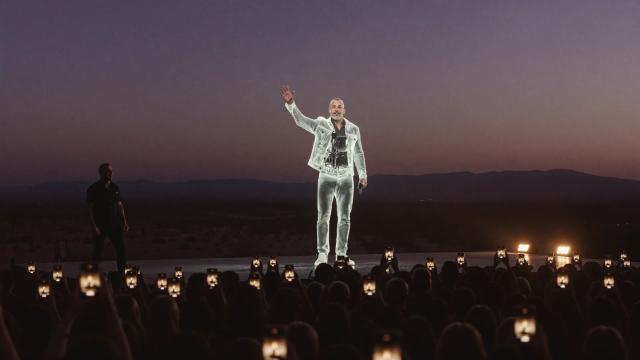 PredictionTrackingHOLOGRAMS 203010 AVATAR RESIDENCIES SELL $1 BILLION A YEAR. HOLOGRAMS STAY NICHE.
 PredictionTrackingAUGMENTED REALITY 2030AR GROWS 14X, FROM $42 BILLION IN 2025 TO $600 BILLION.
 PredictionTrackingONLYFANS 2030ONLYFANS HITS $15 BILLION. 1% GET RICH, 99% GET $131 A MONTH.
 PredictionTrackingMETAVERSE ECONOMY 2030METAVERSE ECONOMY: $5 TRILLION. DON'T DO IT THE ZUCKERBERG WAY.
 PredictionTrackingSPATIAL COMPUTING 2030SPATIAL COMPUTING + AUGMENTED INTELLIGENCE: AR'S NEXT LAYER.
Questions about Apple, answered
Is $150 billion for Apple Health hype?
No, $150 billion for Apple Health is not hype. Apple is quietly building a health empire without owning a single hospital: Apple Stealth Care. From your wrist to your ears, it already runs a $15 billion health ecosystem in 2025, just 4% of Apple's revenue, powered by medical-grade sensors, research cohorts and behavioral nudges. My forecast: $150 billion by 2030, a 10x. Wall Street's own 14-analyst spread runs from $15 billion to $313 billion. My $150 billion is the middle of their road, driven faster. Compare: Philips grows its $19 billion healthcare business at a sluggish 1 to 3% a year. Apple runs ECG, blood oxygen and, since September 2025, high blood pressure alerts, with glucose next, all feeding into the world's most trusted opt-in health data vault. With Fitness+, Sleep and Mindfulness, Apple turns daily routines into optimized living. This is not about gadgets. It is lifestyle programming and biohacking at scale. When the models spread that wide, the wave is bigger than the models.
Full answer →What is Apple Stealth Care?
My name for Apple's hidden health empire. Apple owns no hospitals, yet it put a hospital-grade sensor network inside a watch and earbuds and books the money where no analyst can see it. No reported number means no analyst model, and no model means nobody prices it.
Full answer →How much has Apple's App Store revenue fallen?
Apple's US App Store commission revenue is down 18% in 2026 after courts banned fees on external payment links. US App Store consumer spending fell 6% in the second quarter of 2026 after 9% growth a year earlier. The EU fined Apple $560 million and forced open payments.
Full answer →Will Apple and Google lose the 30% app store tax?
Yes, by 2030. AI agents buying through open standards move more commerce than the app stores ever did, and the 30% commission collapses. The courts opened the wall in 2025 and 2026. The agents drive through it.
Full answer →How does OnlyFans' 20% cut compare to Apple and YouTube?
OnlyFans takes 20% from creators. Apple and Google take 30%, YouTube takes 45% of ad money, Twitch takes 50% of subscriptions. The porn site pays creators better than Silicon Valley. That is why 4.6 million creators showed up. The lesson the market misses is the fairest cut in Big Tech.
Full answer →How does Apple beat Philips in health?
Philips, the whole company, medical imaging, hospital monitors, personal health, sells $19 billion a year growing 1 to 3%. Apple's health side project sells $15 billion. The side project is about to eat the specialist: the gadgets are the Trojan horse, the empire is services, subscriptions and the health data layer.
Full answer →How big is Apple's health business?
About $15 billion a year in 2025, hidden inside Apple's "Wearables" and "Services" lines and never reported as its own number. That is 4% of Apple's $416 billion in revenue. I forecast $150 billion by 2030, a 10x, on the record since September 2025.
Full answer →How big is the healthcare pond Apple is fishing in?
Healthcare is a $10 trillion industry. Digital health alone passes $1 trillion by 2030, and I say Apple takes $150 billion of it. By 2030 health stands next to iPhone and Services as a pillar of Apple's business model. Not an accessory. A pillar.
Full answer →Will AR replace the smartphone?
No, AR will not replace the smartphone any time soon, just like the Apple Watch did not. Some AR glasses could take over parts of the smartphone in the future, but first AR adds a layer on top of it: your glasses, windshield, workplace, city and eventually your eyes. The world becomes the interface. My forecast: AR grows more than 14x, from $42 billion in 2025 to $600 billion by 2030. I joined the advisory board of Augmento, the Dubai-based AR company, because I prefer skin in the game over PowerPoint predictions.
Full answer →Is the metaverse dead, or just changing?
No, the metaverse is not dead. It is misunderstood. I predict the durable version will be many interconnected digital layers powered by AR, XR, and AI, not 1 escapist cartoon world. Every Big Tech CEO seems obsessed with the movie Ready Player One. Don't get high on your own supply. Meta burned more than $80 billion on legless avatars since 2020, according to its own Reality Labs results, and cut more than 11,000 jobs in November 2022. Then it quietly pivoted to smart glasses that actually sell. I called the rebrand a mega misstep by Mark Zuckerberg on 31 October 2021. Apple never said metaverse once and built Vision Pro anyway. The real metaverse is spatial, practical, and layered onto reality: navigation in your glasses, a digital twin of your factory, a concert you attend from your couch. Never confuse explosive adoption of a feature with a platform shift, and never confuse a bad first product with a dead idea. It arrives quietly, then shows up everywhere.
Full answer →What is extended reality (XR)?
Extended reality, or XR, is the umbrella term covering augmented reality (digital layers on the real world), virtual reality (a fully digital world), and mixed reality (the 2 blended). I treat XR as foundational infrastructure that will reshape communication, learning, work, and entertainment, and the money agrees: Meta poured tens of billions into Reality Labs, Apple built visionOS, and Google launched Android XR. It is not 1 gadget or 1 app. It is the shift toward computing that understands space, presence, and context. Treat it as a platform, not a toy. The companies that dismissed the smartphone in 2007 are the same ones dismissing XR today.
Full answer →What is the future of healthcare?
The future of healthcare is prevention, not repair. I predict AI diagnostics, personalized medicine, genomics (reading your DNA to tailor treatment), wearables, and predictive systems will improve outcomes while cutting cost. The model flips. Instead of waiting for you to get sick, the system monitors, predicts, and intervenes early. Big Tech is already inside: Apple and Samsung on your wrist, Google and Microsoft in the hospital data. I have warned against fast food and processed food on stage for 25 years, because prevention starts with what you eat, not with a pill. Medicine stops being a repair shop and becomes a guardian.
Full answer →What is cobalt, and why does Congo control its supply?
Cobalt is a hard, silver-blue metal inside the batteries of your phone, laptop and electric car. It also goes into jet engines. Batteries took about 76% of global cobalt demand in 2024, according to the Cobalt Institute. One country dominates. In 2025, DR Congo mined nearly 3 of every 4 tons, according to the USGS. Chinese companies run major Congo mines, and China refines most of the world's cobalt. Why is cobalt in the news? The human cost. Next to the big industrial mines, people dig by hand, children included. UNICEF estimated that 40,000 children worked in mines in southern Congo, Amnesty International reported. In November 2025, a US rights group sued Apple, alleging its supply chain still uses Congo cobalt linked to child and forced labor. Apple calls the claims baseless. The squeeze? Congo banned exports in February 2025, then capped them with yearly quotas. The battery in your pocket starts in a hole in Congo. My forecast: cobalt-free lithium iron phosphate batteries gain market share through 2030, reducing cobalt's share of battery demand. Total cobalt demand may still grow. Price test: US spot cobalt cathode averages below $30 per pound in 2030. Raw materials, natural resources, commodities, minerals, critical minerals and rare earths: see my top 10 raw materials, my OIL 2075 prediction card and the top 10 richest countries in natural resources.
Full answer →What is spatial computing?
Spatial computing fuses digital information with the physical world through augmented reality, mixed reality, AI, and sensors that map the room around you. I call it the biggest platform shift since the smartphone. I forecast the AR market grows from $42 billion in 2025 to $600 billion by 2030. Apple built Vision Pro around it, Meta sells Ray-Ban smart glasses by the millions, and Google puts Gemini into eyewear through Android XR. The screen dissolves into the world, and the world becomes the interface. You stop staring into a rectangle and start interacting with data layered onto your environment. I put my own name behind it on the advisory board of Augmento. The next decade of computing is spatial.
Full answer →Why did Clubhouse fail?
Launched iPhone-only, millions of Android users locked out on day 1. Everything was live: arrive late, you missed it; room ended, content gone, no replay, no library. It recorded your conversations while you could not record them, a privacy and GDPR minefield. Endless rooms, little signal. Then the pandemic ended, FOMO died, and Big Tech copied social audio overnight. 10 million weekly users and a $4 billion valuation in 2021, half the staff gone by April 2023.
Full answer →Why is Amazon blocking shopping bots?
Because a bot that buys direct does not see Amazon's ads, its ranking or its private labels. Amazon blocking agents at its gates is the same move as Apple defending its 30%: a gatekeeper protecting a toll booth the traffic is about to route around.
Full answer →How big will XR be by 2030?
Grand View Research forecasts XR at $1.07 trillion by 2030, up from $142.4 billion in 2023, 32.9% a year. Huge, but handle the consultant numbers with care, because the categories overlap. XR covers augmented, virtual and mixed reality. The same house forecasts spatial computing at $469.8 billion by 2030. Do not add the 2 together. Spatial computing overlaps with XR and adds the hardware, software and services that let computers understand 3D space. Apple, Meta, Google, Microsoft and Qualcomm are fighting for this interface. I put my own money where the forecast is: I sit on the advisory board of Augmento (a Dubai-based AR company), because skin in the game beats PowerPoint predictions. My forecast: AR reaches everyday life faster than full VR. Most people want digital intelligence added to the real world, not a day sealed inside another one. The winning device looks less like a computer strapped to your face and more like normal glasses. Holography matters, but it is 1 technology inside a bigger shift: computing leaves the rectangle and enters the room.
Full answer →What is OpenAI's royalty grab?
Build a drug, a startup or a deal on OpenAI's tools and OpenAI wants a cut of the outcome. Enterprises pay per result since August 2026. Apple takes 30%, YouTube 45%, OpenAI reaches for a share of what you build. No capital, no risk, no consent. ChatGPT is the toll booth between 1 billion people and the internet, and OpenAI collects at the gate.
Full answer →What is the metaverse really about?
Immersive experiences becoming a layer of daily commerce and culture, exactly like the mobile internet did. Not strapping a headset to your face. The picks and shovels are being laid now: Meta's Reality Labs, Apple's Vision line, Nvidia's Omniverse, Snap's optics, Niantic's map of the real world.
Full answer →Who is building the 3D map of the real world?
Pokémon Go crowdsourced 30 billion urban images from 700 million players. Niantic sold the games to Scopely for $3.5 billion in 2025 and kept the map. Google Street View, Apple Look Around, Tesla's camera fleet, every Waymo on the road: mapping machines dressed as products. You thought you were playing a game. You were building an empire's atlas, for free.
Full answer →Which companies are betting on AR?
Meta poured tens of billions into Reality Labs while Ray-Ban Meta smart glasses sell by the millions. Apple built Vision Pro and visionOS and moves toward intelligent glasses. Google brings Gemini into eyewear through Android XR. Snap invested more than $3 billion in AR and brings consumer SPECS to market. Niantic Spatial builds a 3D map of the physical world.
Full answer →