Disruption.
Why do most leaders miss disruption?
Most leaders miss disruption because they lack the DNA, culture, and mindset for it. They defend the present instead of studying the future. I see the same script every time. Leaders protect today's revenue, dismiss early signals as niche, and underestimate adoption speed.
Igor's predictions on Disruption

Questions about Disruption, answered
Why do most leaders miss disruption?
Most leaders miss disruption because they lack the DNA, culture, and mindset for it. They defend the present instead of studying the future. I see the same script every time. Leaders protect today's revenue, dismiss early signals as niche, and underestimate adoption speed. By the time the threat is obvious, the cheap window has slammed shut. Linear thinking inside an exponential market is the quiet assassin of great companies. They ask about the ROI of innovation, the return on investment, and forget the other ROI: the risk of inaction. Innovation is a culture, not a department. Everyone wants innovation, no one wants to change. I hear it in every boardroom: "But Igor, we have been doing it like this for 20 years." That is the most killing phrase for innovation I have ever heard. Most big incumbent brands rely on advertising. I have news for them: advertising may win quarters, innovation wins decades.
Full answer →Why Does Exponential Tech Break Business Plans?
Exponential technologies break business plans because most corporate leaders think in straight lines while technologies like AI, robotics, and biotech accelerate exponentially. They defend yesterday's business models while outsiders build tomorrow's empires. For 25 years, I have said it on stages worldwide: disruptive innovation comes from outsiders and outliers. Never from the insiders defending their own industries. Revolut did not ask traditional banks for permission. Google and Meta did not ask advertising agencies. Now AI is automating the very services those agencies built their empires on. This is my Mad Men vs. Math Men philosophy. Mad Men protect legacy businesses with advertising, consultants, and backward-looking research. Math Men embrace exponential technologies, invent new business models, and capture entire markets. The most dangerous sentence in business? "We have been doing it like this for 20 years." Everyone wants innovation. Nobody wants to change. Advertising may win quarters. Innovation wins decades.
Full answer →Why will Hollywood be disrupted?
Because 4 forces hit at once: AI tools, creator-led studios, global streaming, and new ways to make money. For 100 years Hollywood decided which stories got made: pitch, wait, get rejected. That gate is open now. My prediction: a small team with AI tools reaches a global audience without asking anyone for permission. Faster, cheaper, and more direct than Hollywood can move. Nobody needs the gatekeeper when the gate is open.
Full answer →How much manufacturing does 3D printing disrupt by 2040?
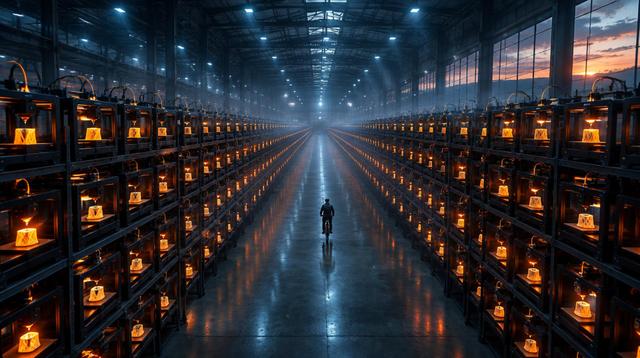
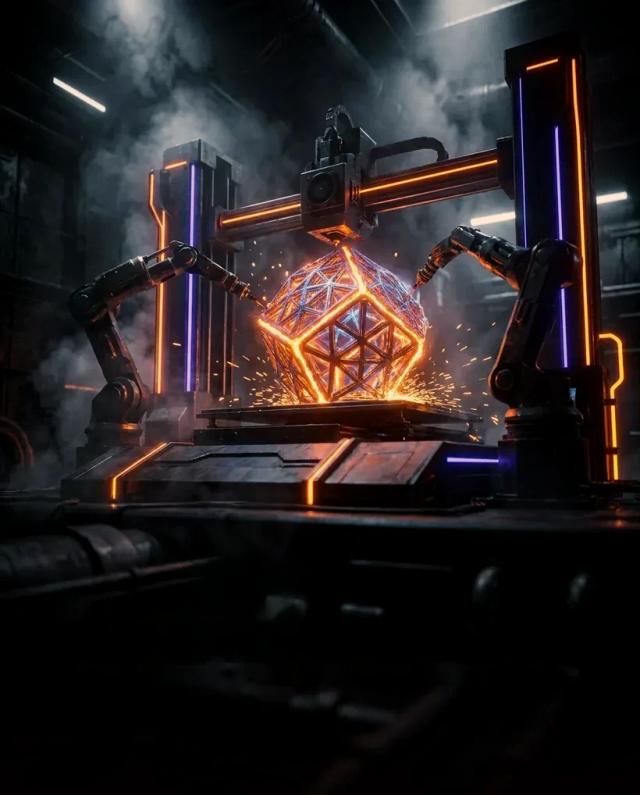
3D printing, also called additive manufacturing, disrupts 40% of manufacturing, global trade and logistics, with 30% of products 3D-printed, my call on the record since 2011. Roughly $1 trillion shifts to decentralized production by 2050. Plain English: you print the product where you need it instead of sailing it around the world.
Full answer →What Are Igor Beuker's Boldest 2040+ Predictions?
My 5 boldest predictions for 2040 and beyond are: 3D printing disrupts 40% of manufacturing, trade, and logistics by 2040. Live sports becomes a $10 trillion attention economy by 2050. Humanoid robots deliver $12 trillion in annual work by 2050. Space becomes a $5 trillion industry by 2050. And the world remains dependent on oil until at least 2075. 3D PRINTING 2040. Factories become software. Instead of shipping finished products around the planet, we increasingly print what we need, where we need it. Manufacturing, logistics, and global trade face a 40% disruption. I have had this prediction on the record since 2011. Today, industrial printing is already transforming manufacturing. LIVE SPORTS 2050. In a world flooded with AI-generated content, authentic live competition becomes incredibly valuable. I forecast the broader live sports attention economy growing from approximately $2.3 trillion in 2025 to $6.5 trillion by 2040 and $10 trillion by 2050. Broadcasting rights, immersive experiences, and digital twins create new fortunes. HUMANOID ROBOTS 2050. My forecast: the humanoid market grows 14-fold by 2030. By 2040, productive robot labor approaches $3 per hour versus roughly $26 for human labor. By 2050, 1 billion humanoids could deliver $12 trillion in annual work. Let the machines take the heavy, dirty, and dangerous work. SPACE ECONOMY 2050. The next gold rush is beyond Earth. My $5 trillion forecast includes $3 trillion from space mining, $1 trillion-plus from satellites and infrastructure, and $1 trillion from travel and tourism. Asteroid mining remains the biggest wildcard. I first published my space gold rush prediction in 2018. OIL 2075. Politicians promise a green transition. My prediction is less comfortable: oil still supplies at least 20% of global primary energy in 2075. Aviation, shipping, petrochemicals, and heavy industry will not abandon oil overnight. Energy transitions take generations, not election cycles. These are public, dated forecasts, not guaranteed outcomes. My Prediction Accuracy Rate (PAR) is 84%, measured across my published public forecasts over 25 years. The future is not about guessing correctly. It is about spotting change early enough to act. Advertising wins quarters. Innovation wins decades.
Full answer →How will biotech and genomics change farming by 2030?
By 2030 genomics and biotech become as important to farming as machinery. Traditional crop breeding can take years. Genomics, gene editing such as CRISPR and AI-assisted breeding speed up the search for crops that tolerate drought, resist disease, use fewer inputs and produce better yields. This is one of the biggest AgTech shifts people underestimate. Biotech, from CRISPR to lab-grown food, is disrupting both pharma and agriculture. It is exponential technology. It does not grow at 10% a year. China moves fast. In December 2024 it approved 17 new genetically modified (GMO) and gene-edited crop varieties. 5 of them are gene-edited, including wheat, rice, corn and soybeans. Biotech also reaches beyond crops: biological fertilizers, biological pest control, alternative proteins and microorganisms that improve soil and plant health. The next agricultural revolution will not only happen in the field. Part of it will happen in the lab.
Full answer →Does Igor Beuker support OnlyFans?
No, I do not support OnlyFans. I understand people want to make money. But not because of sex: because of role modeling. Millions of young girls learn that their body is their business plan. And the business is not the dream it is sold as: the average creator makes $131 a month after fees, while the top 1% take 33% of all the money. I forecast the business. I do not endorse it.
Full answer →Why do companies book Igor Beuker for keynotes?
Companies book me for foresight with receipts, not a brochure with a microphone. I predict the social, cultural, tech, and geopolitical trends that disrupt their industry, years before they make headlines. Their audience gets the full set: imagination, inspiration, education, motivation, and action. Events book me because I put butts in seats. My name on the lineup sells tickets, the talk fills the room, and the energy keeps it full until the last story. Their ROI: butts in seats, rave reviews. Founders, investors, brands, cities, and governments book me for marketing days, leadership summits, sales kickoffs, investor days, and boardroom sessions. Most speakers tell stories. I come to change their P&L. Their ROI: 100 to 200 times my fee. Either way, 100% of my speaking fees fund social innovation. Burning Man meets TED, 2,500+ shows in 141 countries, 5 exits, and 100% independent: no sponsors, no ads, no bribes, ever.
Full answer →Will AGI really change society that much?
Yes, AGI will change society that much. AGI can be a disruptive force that automates processes, replaces white-collar and blue-collar jobs, and creates breakthroughs across many industries and in biomedical research. It does not just raise productivity. It changes who creates knowledge. My forecast: AGI before 2030. Follow the money: the hyperscalers plan $700 billion of AI spending in 2026 alone. I predict machines will redesign whole sectors as they absorb complex cognitive work. Strategy, research, and decisions stop being exclusively human. The winners rebuild around human-plus-machine intelligence instead of bolting AI onto old structures. Half measures lose. Reinvention wins. This is not a drill.
Full answer →Why do stablecoins matter?
Stablecoins matter because they combine the speed of digital assets with the stability of real currency: a digital dollar that stays worth 1 dollar, moving in seconds across borders. I rank them among the most important developments in modern finance because they strip friction out of global payments. Follow the money: Tether and Circle, the 2 biggest issuers, park their reserves in short-term US government debt, which quietly makes them major buyers of America's debt, which passed $40 trillion in August 2026. Washington noticed and wrote it into law with the GENIUS Act in July 2025. Visa, Mastercard, and Stripe now settle in stablecoins, and banks and regulators scramble to catch up. When incumbents panic, pay attention. The catch: the big issuers can freeze your coins with 1 click. Private money, public leash. I predict stablecoins become the plumbing of global payments by 2030, while almost nobody reads the blueprint. I do.
Full answer →What is Artificial General Intelligence (AGI)?
AGI is AI that performs most intellectual tasks at or above human level. I call it the most disruptive technology in human history because it hits every industry, profession, and institution at once. Past breakthroughs upgraded single sectors. AGI upgrades cognition itself. It does not just change what we build. It changes who, and what, does the thinking. My forecast: AGI before 2030. Follow the money, not the CEOs: the hyperscalers plan $700 billion of AI spending in 2026 alone. Nobody bets that kind of capital on a maybe. The buildout is the timeline. Since 29 September 2026 the White House and the Big Tech bros call all of this "Super Intelligence" (SI). The name changed. The timeline did not.
Full answer →What is the future of Google search?
Google search faces the biggest transition in its history: defending a search-and-click advertising empire against AI systems that answer instead of linking. I predict AI-generated answers erode the click economy that funded Google for decades, and Google knows it: AI Overviews and AI Mode now answer above the links, and publishers report their Google traffic falling by double digits since 2024. The incumbent holds the data, the distribution, and the most to lose. Google survives, because it owns Gemini, Android, Chrome, and YouTube. Its click business does not survive intact. This is the fight of the decade, and clicks are the casualty.
Full answer →What is the future of 3D printing?
3D printing becomes one of the most disruptive manufacturing technologies of the century. 3D printing, also called additive manufacturing, builds an object layer by layer from a digital file instead of cutting it from a block or molding it in a factory. I predict that as costs fall and capability rises, production moves closer to consumers, cutting waste, inventory, and transport. SpaceX and Relativity already print rocket engines, and dentists print your crown while you wait. The factory shrinks and multiplies. Companies stop shipping finished goods across oceans and start shipping designs, printing on demand near the customer. Manufacturing comes home.
Full answer →What is synthetic media?
Synthetic media is any content created or enhanced by AI, including text, images, audio, video, and entire virtual personalities. I call it the biggest disruption in media history because it collapses production cost while shattering our ability to tell real from fake. It is creative rocket fuel and an authenticity crisis in the same box. Both are arriving. I forecast that by 2030 more than 90% of social media is synthetic or artificially amplified. AI will produce infinite content. Authentic storytellers produce signal.
Full answer →How do I contact Igor Beuker for media or press?
Through my press page, igorbeuker.com/media/: ask for an interview, a quote, an op-ed or the media kit. Or via my manager Sabina Lopez at Speakers for Humanity. Journalists come to me for AI, disruption, the space economy, and the money behind the headlines, because I have no sponsor to protect. I give quotes with receipts. Deadlines respected.
Full answer →What's your Secret Vault?
My Secret Vault gives ambitious minds uncensored, honest, truth-seeking news and forecasts from an independent expert, not Big Tech, sponsored, or bribed predictions, so they can boost their freedom and wealth. Live like the 1%. Think like them first. Inside: my tips, tools, trends, and the research behind my predictions, with 3,600+ handpicked reports, sources, apps, and insights across 55+ collections, covering exponential technologies, disruptive shifts, emerging markets, and business opportunities. Built to help you see what is coming, make smarter decisions, seize opportunities, and create your own future. Boardroom intelligence at misfit prices.
Full answer →What is an in-house futurist?
An in-house futurist is a dedicated futurist embedded in an organization to integrate strategic foresight into leadership decisions, innovation, and long-term business strategy. Also called a resident futurist, the role can be filled by a full-time employee or an external futurist on a long-term mandate, sometimes structured as a fractional futurist. The mission: identify disruption early, challenge strategic assumptions, test future scenarios, and help leadership make smarter investments before markets change. Insiders understand the organization deeply but can become trapped in its assumptions. Outsiders bring fresh perspectives but need meaningful access to influence decisions. My model combines both advantages: outside independence, inside access. No sponsors, no stock to pump. Just the freedom to challenge even the CEO’s favorite plan. The best in-house futurist says what the room does not dare to say.
Full answer →What is futurism?
Futurism is the systematic exploration of how the world could change over the years and decades ahead, helping founders, investors, brands, and cities anticipate disruption and shape better futures. Where a futurist is the person, futurism is the practice: a discipline that turns uncertainty into options instead of fear. The goal? Identify emerging opportunities, anticipate threats, discover new markets, and build strategies that remain relevant as the world changes. Futurism does not predict 1 inevitable future. It asks a bigger question: Which future do we want to create? My approach combines imagination, evidence, and machines. Imagination to see opportunities before they become obvious. Evidence to test assumptions. Machines to scale solutions. If we can imagine a brighter future, we can help create it.
Full answer →What is a futurist?
A futurist studies emerging trends, technologies, and forces of change to help people, businesses, and governments anticipate what comes next and make smarter decisions today. Using strategic foresight, scenario planning, and trend analysis, futurists connect technological, economic, social, cultural, environmental, and geopolitical developments to explore possible, probable, and preferable futures. The goal? Spot opportunities early, anticipate disruption, reduce risks, and turn future intelligence into competitive advantage. A futurist is not a fortune teller. The future is not predetermined, and no forecast comes with a guarantee. My approach goes further. I make bold, measurable predictions, explain the evidence behind them, and track whether they come true. Anyone can speculate about tomorrow. A credible futurist helps you prepare for it today.
Full answer →Why did Igor Beuker create futureXperience?
I created futureXperience because most people wildly underestimate how fast the world is changing. The show drags audiences past today's headlines and into the long-term impact of exponential technologies. It exists to trigger action before disruption arrives, not panic after. Linear minds need a vivid, visceral preview of an exponential future. Show people what is coming while they can still prepare.
Full answer →Why does futureXperience explore 50 future technologies?
futureXperience explores 50 future technologies because the future is many trends compounding at once, not a single headline. The framework helps audiences visualize multiple futures and see how technologies collide and amplify each other. Studying any single innovation alone misses the real story. The collision is where the disruption lives, and where the opportunity hides for anyone bold enough to look.
Full answer →What topics does Igor Beuker speak about?
I keynote on AI, AGI, robotics, the space economy, the future of work, marketing and media disruption, Tech for Good, and my Mad Men vs. Math Men vs. Machines framework. Every talk is tailored to your audience and industry. The through-line never changes: where the world is heading next, and what to do about it before your competitors move.
Full answer →What is Mad Men, Math Men, Machines?
My framework: imagination to see the market, math to prove it, machines to scale it. Advertising may win quarters. Innovation wins decades. I envisioned it 25 years ago and turned it into my signature framework and methodology: Mad Men vs Math Men vs Machines. The Mad Men, the traditional incumbents, burn billions on campaigns and backward-looking market research and call it strategy. The Math Men skip the pitch deck and become the new business case. The Machines scale it. Marketing used to be an art. Now it is a science too. Imagination to see the market before it exists, math to prove it, machines to scale it. Dream like an artist, decide like a scientist. I flipped the funnel myself, then cashed in the lens when Sir Martin Sorrell's WPP (NYSE: WPP) acquired 3 of my marketing firms. Today it is my most booked keynote, and 1 sentence no boardroom forgets.
Full answer →Who loses when creators own the brand?
The incumbent. Unilever, the biggest advertiser on Earth, moves half its ad budget to social and hires 20 times more influencers. The company that owned the shelf now rents by the post. Mad Men rent attention. Math Men own it.
Full answer →Why did you build the Secret Vault, and who is it for?
I built the Secret Vault to put the future intelligence once reserved for corporations, investors, and wealthy insiders in everyone's hands. You deserve uncensored, honest, truth-seeking news and forecasts from an independent expert, not Big Tech, sponsored, or bribed predictions, so you can boost your freedom and wealth. Live like the 1%. Think like them first. After 25 years of predicting disruption and building companies with 5 exits, I decided to open my research to people who dare to take action. It's for entrepreneurs, founders, investors, freelancers, creators, ambitious employees, and fellow misfits who want to take control of their future, build financial independence, and use their success to make a positive impact.
Full answer →What is exponential thinking?
Exponential thinking is the discipline of seeing how a technology doubles in power while halving in cost until it rewrites an entire market. I teach it because evolution built human intuition for a slow, local world. Master it, and you stop reacting to disruption and start positioning for it 6 to 18 months before your competitors even notice.
Full answer →