Trends.
STABLECOINS BECOME THE DIGITAL DOLLAR AS US DEBT PASSES $40 TRILLION.
Futurism is bigger than technology. It is predicting the biggest geopolitical, financial, economic, and legal shifts 10 to 20 years before they become trends, the way I called digital rails beating the crypto casino back in 2008.
Igor's predictions on Trends
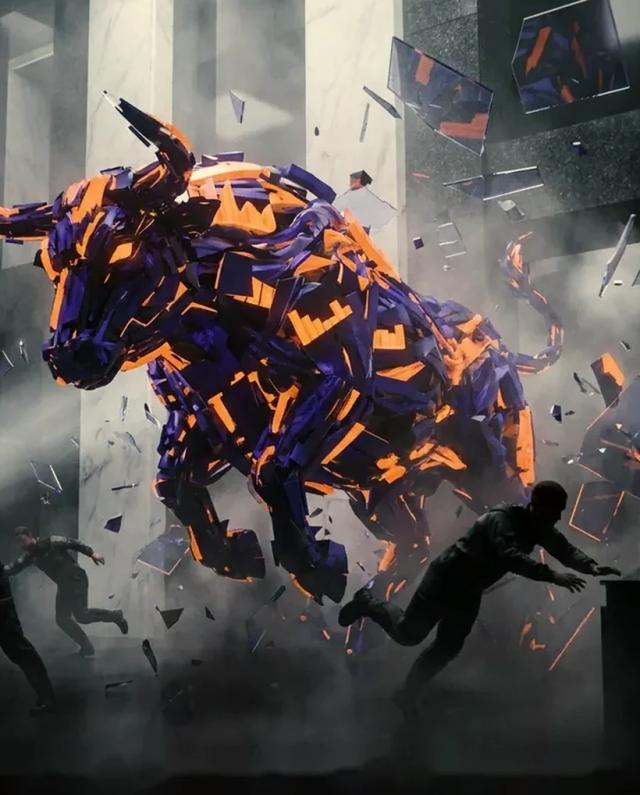 PredictionTrackingSTABLECOINS 2030STABLECOINS BECOME THE DIGITAL DOLLAR AS US DEBT PASSES $40 TRILLION.
 PredictionTrackingWATERSPORTS TECH 2030WATERSPORTS TECH: $19 BILLION. THE OCEAN IS THE NEW FORMULA 1.
 PredictionTrackingMAX VERSTAPPEN 2030MAX VERSTAPPEN: 5 FORMULA 1 WORLD TITLES BEFORE 2030.
 PredictionLandedMAX VERSTAPPEN F1 2021MAX VERSTAPPEN: F1 WORLD CHAMPION BY 2021.
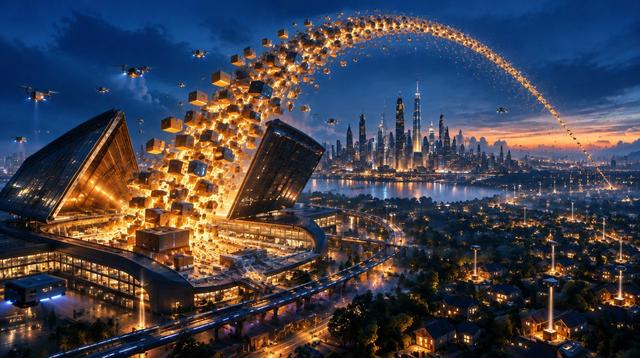 PredictionTrackingGLOBAL RETAIL 2030$35 TRILLION RETAIL: 3 IN 10 DOLLARS ONLINE. STORES SHIP IT.
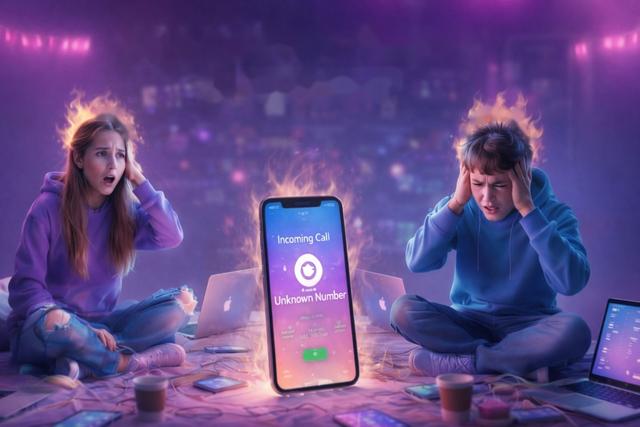 PredictionLandedGEN Z NEEDS A SENSEI 2026GEN Z NEEDS SENSEIS, NOT INFLUENCERS: 46% HAVE A MENTAL HEALTH DIAGNOSIS.
 PredictionTrackingMILITARY TECH 2040GLOBAL MILITARY SPENDING: $2.9 TRILLION IN 2025, $12 TRILLION BY 2040.
Questions about Trends, answered
What is the watersports trend Igor Beuker predicts?
Cleaner watersports: electric foils, solar boats and silent motors replace 2-stroke noise and fumes, and the playground gets cleaner as the tech gets better. Why the old way has to go: an old carbureted 2-stroke engine pushes part of its fuel straight out of the exhaust, unburned, into the water you swim in. Rich countries are already phasing out many small 2-stroke engines. The new fleet is ready. eFoils from Lift Foils and Fliteboard, electric hydrofoil boats from Candela, electric outboards from Torqeedo, solar yachts from Silent-Yachts. The water needs it. From January 2023 to September 2025, about 84% of the world's coral reef area hit bleaching-level heat stress, the worst global bleaching event on record. The money is moving too. Surface watersports equipment grows to $19.58 billion by 2030. That is the forecast. The suits will discover it in 2029 and call it a surprise.
Full answer →What is the difference between a trend and a fad?
A fad spikes your feed and vanishes, while a trend is a durable shift in behavior, technology, or economics that keeps reshaping markets for years. Fad examples: fidget spinners, or Clubhouse, the audio app that exploded during lockdown and faded fast. Trend examples: smartphones, streaming, and generative AI. ChatGPT reached 900 million weekly users by February 2026, more than 3 years after launch, and it keeps growing. How do you tell them apart? Follow the money and the habits. A fad runs on novelty. A trend runs on a real need, falling costs, and repeat use. A trend attracts serious capital and patents. A fad attracts influencers. I build on trends and ignore hype. The test is a single question: does the behavior compound, or does it trend on Tuesday and die by Friday? Bet accordingly.
Full answer →What is the difference between a futurist and a trend forecaster?
A trend forecaster identifies emerging patterns and predicts how they could influence consumer behavior, products, and markets, often over months to a few years. A futurist explores how multiple forces of change could reshape entire industries, economies, and societies. Trend forecasters often focus on fashion, retail, design, media, and consumer markets. Their output? Trend reports, consumer insights, and product opportunities. Futurists connect technology, economics, culture, regulation, and geopolitics, including second-order consequences that others overlook. Their output? Future scenarios, strategic options, and long-term forecasts. The difference? Trend forecasting helps you anticipate what comes next in a market. Futurism challenges whether the market itself could fundamentally change. Both are valuable. The mistake is building a 20-year strategy on a trend report. My approach uses trends as raw material, not conclusions. I look for the moment 2 or 3 trends collide, because that is where industries can flip. Trends are the weather. Futurism is the climate.
Full answer →How many people are overweight or obese?
About 2.5 billion adults are overweight, 43% of all adults on earth. Of them, 890 million live with obesity, the heavier end of the scale. That is 16% of adults, in the 2022 count. Add children and teens, and over 1 billion people live with obesity, 1 in 8 humans. It is not only adults. Over 390 million children and teens aged 5 to 19 are overweight. The trend is steep. Adult obesity more than doubled since 1990, and among teenagers it quadrupled. Obesity kills more people than hunger. Excess body weight causes about 3.7 million deaths a year. The bill: $3 trillion a year by 2030 if nothing changes, and more than $18 trillion a year by 2060, the World Obesity Federation projects. I am not a doctor. I follow the data and the money. My 2030 call: 3 billion people overweight or obese, more than 1 in 3 humans on earth.
Full answer →Is the AR platform shakeout a collapse?
No, AR is not collapsing. It is only getting bigger. Spatial computing, AR and augmented intelligence converge into 1 new computing layer over the physical world. Everything in the real world needs it: factories in China, cars, robots, smart cities and glasses. They all need a precise, constantly updated 3D map of the real world. My forecast: AR grows from $42 billion in 2025 to $600 billion by 2030. Spatial computing becomes critical national infrastructure by 2030, its builders the Oracles and Microsofts of 2035. 1 of the biggest trends ever. The shakeout is consolidation, not collapse. Niantic sold its Pokémon GO games to Scopely for $3.5 billion in 2025 and kept the map: 30 billion urban images from a game downloaded more than 750 million times. The trend I predict. The mission I choose: this layer serves people, never scores them.
Full answer →Do creator brands last?
Yes, creator brands last when the product is real. And the trend is big: founder-creator-builder brands reach $10 billion in scale by 2030, and the first $10 billion celebrity brand arrives by 2030. The proof: Nike, the biggest sports brand on Earth, needed SKIMS to build NikeSKIMS for women. SKIMS is the brand of Kim Kardashian, net worth about $1.9 billion. It is valued at about $5 billion. Not all of them last. Prime, the drink teenagers hunted like treasure, lost more than half its sales after the 2023 peak. In the UK, sales fell 48% in 2024 alone, according to NielsenIQ. Creator brands spike fast and crash faster. Mad Men rent, Math Men own: Unilever moves 50% of its ad budget to social and hires 20x more influencers. I put my own money in: in January 2025 I spoke at the Sandbox Studios AGM on Necker Island and joined the Los Angeles fund behind Snoop Dogg's Dr. Bombay as an investor. Ownership beats hype only if the product is real.
Full answer →Why does Igor Beuker call Cristiano Ronaldo a Cause Athlete?
I call Cristiano Ronaldo a Cause Athlete because he does not write checks, he sets trends. Start with the reach. In 2024 he became the first person with 1 billion followers. More than 669 million follow him on Instagram alone. Then the receipts. Save the Children made him a global ambassador in 2013. In 2014 he paid about $83,000 for a baby boy's epilepsy surgery. In 2017 he auctioned his 2013 Ballon d'Or for about $800,000 for Make-A-Wish. In 2020, with his agent Jorge Mendes, he gave about $1 million for intensive care beds in Lisbon and Porto. In 2023 he sent a plane full of tents, food and medicine to earthquake victims in Turkey and Syria. In 2024 his signed Al-Nassr shirt raised $125,000 at a Saudi charity auction for autism. And he has no tattoos, so he can keep donating blood. When he acts, millions of fans follow. This is not about football. It is about leadership and generosity at planetary scale. I was kicked out of football. He became the GOAT and then used it for good. I told his full story in my blog on Ronaldo, read 5 million times, and Rolling Stone published my story on Cause Athletes in 2022. That is a Cause Athlete at full power, and the model every athlete should study.
Full answer →What is the future of lab-grown food?
Lab-grown food, also called lab-grown meat, cultivated meat or cell-based meat, is meat grown from animal cells in a tank instead of on a farm. My forecast: it grows into a real slice of the food supply, slower than the hype. I don't like that forecast. I often predict things I personally don't like. The trend I predict: engineered food will not replace traditional farming by 2030, but it takes a growing share, and not without a fight. So far, Singapore approved lab-grown meat first in 2020, the US followed in 2023. The money is already in. Bill Gates, net worth about $108 billion, is the largest private owner of farmland in the US, about 242,000 acres. In 2017 Gates backed Memphis Meats, now Upside Foods. Gates owns the land and backs the lab. Taste and price set the pace. Politics sets the speed limit: Italy, Florida and Alabama banned it to protect their farmers. Beyond Meat lost 90% of its stock value proving fake meat alone does not win. The mission I choose: I warn against lab-grown meat, against genetically modified organisms (GMOs) and against McDonald's rubbish. Real food grows in soil, from farmers. Not in a bioreactor owned by a billionaire. And I warn against him. My view is clear: Bill Gates is a danger to society when concentrated private influence reaches too deeply into food, health, technology and public policy. That is my opinion. Protect the farmers. A world without farmers eats from the lab.
Full answer →What is post-human evolution?
Post-human evolution is the merging of biology and technology in future generations. In plain words: humans start upgrading themselves with chips, gene editing and AI, instead of waiting for nature. I predict brain-computer interfaces, biotech, AI, and advanced medicine will fundamentally change what it means to be human over coming centuries. It has started. Neuralink, the brain-chip company of Elon Musk, net worth about $907 billion, had 21 participants enrolled in its trials worldwide by January 2026. People with spinal cord injuries use the implant to move a cursor, browse the web and play games by thought. Lifespans are rising too. Global life expectancy reached 73.3 years in 2024, and the UN expects 77.4 by 2054. Evolution stops being purely biological and becomes partly engineered. The warning: whoever can afford the upgrades gets ahead. That raises hard questions about fairness and about who decides. I call this the most consequential and least discussed long-term trend on the table. The species itself becomes a design project.
Full answer →What is Igor Beuker's skin in the game?
My skin in the game is my own money, in the trends I forecast. $500,000 into SpaceX in 2018. SpaceX is Elon Musk's company, and Musk is the richest person on the planet, net worth about $907 billion. An advisory board seat at Augmento, the Dubai-based AR company. Angel in 24 social startups, 5 exits, and early positions in the companies I forecast. 100% of my speaking fees fund social innovation. So does 80% of my wealth, from private equity to stocks to Bitcoin. Most forecasters get paid to talk, right or wrong. Their calls cost them nothing. I do the opposite, and you can check every call I make on the scoreboard. I invest in the trends I call, which is why a wrong call costs me before it costs you.
Full answer →How bad is Gen Z's mental health?
Bad, and getting worse. 46% of Gen Z carry a formal mental health diagnosis. Excellent mental health fell from 37% to 23% in 6 years. That is not a trend, that is a freefall. Anxiety is their baseline operating system. When did it start? Psychologist Jonathan Haidt, author of The Anxious Generation, shows that anxiety, depression, self-harm and suicide among under-18s rose sharply around 2010, when smartphones spread. Time with friends fell. Sleep fell. Girls were hit hardest: in England, hospital visits for self-harm among teenage girls doubled between 1997 and 2018. Telephobia: 1 college launched a course to teach students how to use a phone. I share stages and task forces with the world's leading psychologists, sociologists and anthropologists, and their research shocked me. I am not a doctor. If you or someone you love is struggling, talk to a professional today.
Full answer →What is Igor Beuker's ocean mission?
My ocean mission: fighting for coral reefs, against overfishing and drilling, and to take plastic out of the ocean. A different thing from the trend. I shared the Ocean Action Summit stage on Necker Island with Richard Branson, net worth about $2.8 billion, and Dr. Sylvia Earle. Earle was the first woman to serve as chief scientist of NOAA, the US ocean agency. Her Mission Blue fights to protect 30% of the ocean by 2030. And I carry the Cousteau legacy. Why it is urgent. Coral: from January 2023 to September 2025, about 84% of the world's reef area hit bleaching-level heat, the most intense global bleaching event ever. Fish: only about 62% of fish stocks are fished at sustainable levels, on FAO data for 2023. Plastic: about 8 million tonnes of plastic reach the ocean every year. The trend I predict. The mission I choose.
Full answer →Why does a futurist forecast money and debt?
Because futurism is bigger than technology. It is predicting the biggest geopolitical, financial, economic and legal shifts 10 to 20 years before they become trends, the way I called digital rails beating the crypto casino in 2008. Money decides everything else: who builds, who borrows, who gets switched off. Look at the numbers. US debt passed $40 trillion in August 2026, double the $19.95 trillion of January 2017. Interest now costs about $1.1 trillion a year. In fiscal 2025 it passed the Pentagon budget. That debt needs buyers. Stablecoins became one: in March 2026 Tether alone held about $141 billion of US government debt. Meanwhile 146 countries and currency unions explore state digital money, the Atlantic Council counts. Stablecoins are that call maturing: the future of money is being decided right now, and most media will not connect the dots for you. Watch the rule-writers, not the price charts.
Full answer →What should I start investing in from 2027?
Start with raw materials. Copper, lithium, rare earths and chips. Every AI chip, humanoid and battery starts there. The numbers back it. The International Energy Agency sees copper supply falling about 30% short by 2035, based on the mine projects in the pipeline today. Lithium demand grew nearly 30% in 2024, 3 times the pace of the 2010s. And China is the top refiner for 19 of 20 key energy minerals, with about 70% of the market on average. Supply outside China becomes a strategic asset. Then the exponential technologies. The trends that double every year while the old economy adds 3%. AI. Humanoids. Quantum computing. Space. Then longevity. Consumers worldwide will spend $15 trillion a year on longevity by 2040. A warning: exponential sectors swing hard. Buy the picks and shovels, spread your bets, and never invest money you need next year. This is my view, not financial advice. I called Bitcoin on stage in 2008 and bought in 2011. Same eyes, new decade. Move before the crowd.
Full answer →What happens to legacy media by 2030?
Legacy media doubles down by 2030: deepfakes, synthetic anchors, engagement-tuned outrage. Look at the trend line first. Only 28% of Americans trusted mass media in Gallup's September 2025 poll. In 2020 it was 40%. And for the first time, platforms beat both TV and news websites as a source of news worldwide, the Reuters Institute's 2026 Digital News Report found. The big players consolidate to survive. Paramount bought Warner Bros. Discovery for $110 billion, and the deal closed in October 2026. Cost cutting pushes newsrooms toward AI. CNET already got caught: by January 2023 it had published at least 77 stories by an undisclosed AI tool, and it corrected 41 of them. Now add deepfakes and AI anchors to a business that already lost the benefit of the doubt. Viewers lose track of real versus fake, trust drops below 20%, and the migration to unbribed independent voices completes. The winners show their work, name their sources and own their audience. By 2030 the scarcest asset in media is trust, and the mainstream already spent it.
Full answer →Should I buy fractional art?
Yes, fractional art is worth buying, because the trend is big. The Great Wealth Transfer is coming: $83 trillion moves from parents and grandparents to Gen Z and millennials, the biggest inheritance in history. The heirs buy luxury real estate, luxury goods and art, and more and more they buy it fractional. Tokenization opens art, like real estate, to people who were never let into the room. Entry tickets start at $20 on Masterworks and $56 on Splint Invest. Where it is going: tokenized and fractional platforms hold $10 billion worth of art by 2028. By 2030 a tokenized Basquiat hangs at true scale on your wall in augmented reality, owned by 5,000 people across 40 countries. Fractional ownership becomes the estate tool of a generation that inherited the paintings but not the trophy rooms. All 29 Masterworks exits so far printed a profit. Read the fee table first: fees and the collectibles tax decide your net return. And the $83 trillion is gross: after inheritance tax and inflation, around $60 trillion lands with the heirs.
Full answer →Why does timing matter more than the idea?
Timing matters more because most good ideas fail by arriving too early or too late. Market readiness and adoption behavior decide success more often than the idea itself. The graveyard is full of brilliant concepts the world was not ready for: Clubhouse hit 10 million weekly users and a $4 billion valuation, and I called it fading to black in March 2021. It did. Never confuse explosive adoption of a feature with a platform shift. Trends tell founders when. Ideas only tell them what.
Full answer →Why does Igor Beuker invest in startups?
I invest in startups to back founders riding trends I have already mapped years ahead of the crowd. After 5 exits of my own, including 3 to WPP, I bring pattern recognition most check-writers lack. I favor companies creating positive change while building durable value: 24 social startups so far, and 100% of my speaking fees go there. I invest in the trends I forecast, which is why a wrong call costs me before it costs you. I do not back decks. I back founders who see the wave before the market does.
Full answer →Why does Igor Beuker bet on a Chinese influencer crackdown?
Because I read the lawmakers, not the marketers. Laws and regulators can make or break a technology or a trend. I advise governments and world leaders on what is coming. I read the same intentions in June 2023 when I called China's reversal on crypto and Web3. It landed. Beijing's signals are loud. Viya, the livestream queen, was ordered to pay about $210 million in taxes, penalties and fees. Li Jiaqi, the Lipstick King, went off air for 109 days in 2022 after 1 broadcast. Since 2025, health, finance, law and education content needs credentials. Since February 1, 2026, AI commerce hosts must be labeled as AI. The stakes: China's KOL market was $16.8 billion in 2025, on track for $24.7 billion by 2030. I forecast the scenario nobody is modeling: a severe crackdown cuts that 2030 market by 50%. If Beijing stays hands-off, I am wrong and the market doubles. It won't.
Full answer →What advice does Igor Beuker give entrepreneurs?
Think bigger, move faster, and obsess over execution. I tell entrepreneurs that opportunities arrive disguised as uncertainty, and the biggest rewards go to those who act while others hesitate. Perfect plans lose to fast iteration. I started, scaled, and sold 5 companies by moving before the picture was clear. Look how fast markets move now. OpenAI opened ChatGPT ads on 9 February 2026 and hit a $1 billion annual run rate by 31 August. More than 600 advertisers jumped in within 7 weeks, before any case study existed. My 3 rules: 1. Ship before you feel ready. Version 1 teaches more than the plan. 2. Ride trends, never fight them. Build where the money already flows. 3. Measure execution every week. Momentum is a habit, not a mood. Clarity is a luxury. Momentum is a choice.
Full answer →What does riding waves instead of fighting them mean?
Riding waves means spotting the major technological, social, and economic forces already in motion and positioning your business to move with them. I teach founders to build with powerful trends, never against them. Fighting a wave is exhausting and usually fatal. Riding one multiplies every ounce of effort. A wave today: AI infrastructure. The hyperscalers plan more than $700 billion of AI capex in 2026. Founders who sell into that flow, power, cooling, chips and data, ride it. A wave caught early: ChatGPT ads. The pilot opened on 9 February 2026, and more than 600 advertisers jumped in within 7 weeks. By August it was a $1 billion-a-year business. A wave that broke: Clubhouse. It hit 10 million weekly users and a $4 billion valuation, and I called it fading to black in March 2021. It did. A feature is not a platform shift. Seeing the wave early is exactly what my forecasting work exists to do: coin the trends before they have names, then hand founders the surfboard.
Full answer →Why do companies book Igor Beuker for keynotes?
Companies book me for foresight with receipts, not a brochure with a microphone. I predict the social, cultural, tech, and geopolitical trends that disrupt their industry, years before they make headlines. Their audience gets the full set: imagination, inspiration, education, motivation, and action. Events book me because I put butts in seats. My name on the lineup sells tickets, the talk fills the room, and the energy keeps it full until the last story. Their ROI: butts in seats, rave reviews. Founders, investors, brands, cities, and governments book me for marketing days, leadership summits, sales kickoffs, investor days, and boardroom sessions. Most speakers tell stories. I come to change their P&L. Their ROI: 100 to 200 times my fee. Either way, 100% of my speaking fees fund social innovation. Burning Man meets TED, 2,500+ shows in 141 countries, 5 exits, and 100% independent: no sponsors, no ads, no bribes, ever.
Full answer →What is Igor Beuker's advice to CMOs?
Stop thinking in campaigns and start thinking in transformation. Marketing used to be an art, now it is a science too. I tell CMOs to master AI and customer behavior, build owned audiences, and run marketing as a growth engine, not a cost center. I built and sold 5 martech companies on that playbook. Most CMOs know this quarter's customer acquisition cost. They do not know which 4 trends will erase their category by 2030. That is not strategy. That is bookkeeping. So measure both ROIs: the return on investment, and the risk of inaction. Innovation is a culture, not a department, and the CMO who parks it in a lab is already losing. The CMOs who survive the next decade will look like business builders, not ad buyers. The Math Man in a world of Mad Men.
Full answer →Why do most predictions fail?
Most predictions fail because they chase headlines instead of forces. Failure comes from extrapolating today rather than modeling incentives, technology curves, and behavior. The record is brutal. Psychologist Philip Tetlock tracked about 27,500 forecasts from almost 300 experts over 18 years. Most did little better than chance. 3 classic mistakes: 1. Straight lines. A trend is never a straight line. It stalls, accelerates, and compounds. 2. Wrong incentives. Analysts paid by an industry rarely call its decline. 3. No scorekeeping. Pundits who never grade their calls never learn. The fix works. Tetlock's superforecasters kept score and updated their views. They beat CIA analysts with classified data by about 30%. Forecasters who ignore the machinery underneath get the direction wrong at the exact moment getting it right would have mattered most. That is why I grade my own calls in public.
Full answer →What transformation does Igor Beuker create for audiences?
I send audiences home with a bigger vision of the future and the nerve to act on it. The goal is never explaining trends. It is helping people spot opportunities, embrace change, and take real action in their careers, businesses, and lives. The sequence is Imagination, Inspiration, Motivation, Action, and I measure a keynote by the last 1: the decisions it triggers, not the notes it generates. I do not warm up the room. I rewire it. Inspiration is nice. Action is the deliverable.
Full answer →Why does futureXperience explore 50 future technologies?
futureXperience explores 50 future technologies because the future is many trends compounding at once, not a single headline. Take a humanoid robot. It is not 1 technology. It needs AI to think, chips to compute, batteries to move, sensors to see, and cheap energy to run. Each of those curves speeds up the others. That is how I get to a robot hour at about $3 against $26 for a human in the 2040 decade. The farm works the same way. Drones are only the eyes: by 2030 AI becomes the brain of the farm. The framework helps audiences visualize multiple futures and see how technologies collide and amplify each other. Studying any single innovation alone misses the real story. A CEO who tracks only AI misses the robot. A city that tracks only the robot misses the energy it needs. The collision is where the disruption lives, and where the opportunity hides for anyone bold enough to look.
Full answer →Why did Igor Beuker create futureXperience?
I created futureXperience because most people wildly underestimate how fast the world is changing. We think in straight lines. Technology moves in curves: anything that doubles 10 times grows more than 1,000x. The show drags audiences past today's headlines and into the long-term impact of exponential technologies. Look at what happens to leaders who see the curve late. iRobot, the inventor of the Roomba, went through Chapter 11 and was bought by its own Chinese contract manufacturer. The pioneer became the product. It exists to trigger action before disruption arrives, not panic after. Linear minds need a vivid, visceral preview of an exponential future. That is why futureXperience is a show with 50 future technologies and checkpoints from 2030 to 2100, not a lecture with a trend list. It runs on my 4 steps, Imagination, Inspiration, Motivation, Action, because a preview without action is just entertainment. Show people what is coming while they can still prepare.
Full answer →What is futureXperience?
futureXperience is my flagship futurist show, mapping where humanity is headed between today and 2100. It spans AI, robotics, biotech, space, longevity, and future economies, built on a framework of 50 future technologies. Think of it as a time machine for a room. Instead of 1 trend, the audience sees how 50 technologies collide and compound. It is a show, not a lecture: data, story, humor, and spectacle, in the Burning Man meets TED style that has run on 2,500+ stages in 141 countries. The checkpoints are 2030, 2040, 2050, and 2100. At each one I put a number on the table, like $12 trillion a year in robot work by 2050. The show runs on my 4-step framework: Imagination, Inspiration, Motivation, Action. Founders, investors, brands, cities, and governments book it for their biggest rooms. It fuses science, culture, and imagination into a single experience designed to expand what an audience believes is possible, then push them to build it.
Full answer →What was global media spend before the drop?
$0.99 trillion in 2023, $1.09 trillion in 2024, $1.20 trillion in 2025. That is what brands worldwide spend on advertising: TV, search, social, retail media, outdoor, audio and print. The trend was up and the industry expected $1.32 trillion for both 2026 and 2027. Sources count it differently. WPP Media, which leaves out US political ads, puts 2025 at $1.14 trillion, up 8.8%. Digital drives it. Social and digital platforms took $413 billion in 2025, and search and other intelligence ads $244.9 billion. Retail and commerce media hit $178.2 billion and passed TV for the first time. I forecast that baseline breaks: $1.23 trillion in 2026 and $1.15 trillion in 2027. Why? War with Iran, expensive oil, and CFOs cutting the easiest line first. The gap in 2027 alone is about $166 billion, and most of that pain lands on agencies and publishers, not the platforms.
Full answer →Should futurists be held to their predictions?
Yes, futurists should be held to their predictions, because quality matters. The Prediction Accuracy Rate (PAR) is a benchmark that shows how futurists score. Everybody can predict. In hindsight, we are all futurists. My PAR is 84%, on the record, with a live scoreboard at igorbeuker.com/scoreboard/. As if 5 exits were not already a clear sign that I have a sixth sense for trends. Unmeasured forecasting is unfalsifiable, and unfalsifiable claims are not knowledge. They are vibes in a suit. I measure my calls so you can separate signal from showmanship. Set against Morgan Stanley at 46% and Ray Kurzweil at 86%, my record is a standing dare to an industry that profits from dodging accountability.
Full answer →Why study the creator economy?
Study the creator economy because creators are becoming media companies, communities, and brands at once. I predict the creators who own their audience, IP, data, and distribution will crush anyone renting reach, because by 2030 more than 90% of social content is synthetic and organic human reach goes toward zero. The $250 billion creator economy splits: faceless AI volume on 1 side, named humans with a track record on the other. Only the second side keeps its price. The creator economy is not a side hustle trend. It is the prototype for how every serious business will operate in the next decade.
Full answer →How many keynotes has Igor Beuker delivered?
I have delivered 2,500+ keynotes worldwide, in 141 countries, for founders, investors, brands, cities, and governments. That number is not a vanity metric. It means I have tested my frameworks live, in skeptical rooms, thousands of times, and sharpened exactly what lands. Leading events and leading brands book me for a different ROI. For leading events, it is butts in seats: my name on your lineup sells tickets, my talk fills the room, and the reviews rave. For leading brands, it is growth: most speakers tell stories, I come to change your P&L and help you coin the trends first, with an ROI of 100 to 200 times my fee. Either way, 100% of my speaking fees fund social innovation.
Full answer →How do I book Igor Beuker as a keynote speaker?
Book me directly through my own knowledgeable management, led by Sabina Lopez. No speaker bureaus in between. Send us your brief on igorbeuker.com/book-igor/, or compile it on my Futurism page by picking the trends and technologies that matter to your audience. Choose your format: a headline keynote from my 6 signature talks, a fireside chat with audience Q&A, an executive masterclass, or a trend session. A keynote can be the start of a series, up to Futurism as a Service, with your own in-house futurist. I have delivered 2,500+ keynotes in 141 countries for founders, investors, brands, cities, and governments. My fee is on request, and 100% of my speaking fees fund social innovation. My calendar fills months ahead. The sharpest events plan first. Be one of them.
Full answer →Why does Igor Beuker warn about EU emergency powers?
Under emergency powers the EU can suspend elections, freeze accounts and seize assets: your house, your pension fund, your savings. Why keep that on the table? To seize. Digital ID plus digital euro is the control grid: programmable money is conditional money, conditional on your tax compliance, your political behavior, your carbon score. The trend I predict. The mission I choose.
Full answer →How much of retail is bought online by 2030?
3 in 10 retail dollars by 2030, online or through an AI agent, against the analysts' 1 in 4. Today it is 1 in 5. The extra comes from 2 waves the trend line does not contain: agents that shop for you, $3 to $5 trillion by 2030 on the consultancies' count, and social commerce, TikTok Shop, SHEIN, Temu, where the feed is the shop window. China, the UK and Korea are already at 25 to 30%.
Full answer →What's your Secret Vault?
My Secret Vault gives ambitious minds uncensored, honest, truth-seeking news and forecasts from an independent expert, not Big Tech, sponsored, or bribed predictions, so they can boost their freedom and wealth. Live like the 1%. Think like them first. Inside: my tips, tools, trends, and the research behind my predictions, with 3,600+ handpicked reports, sources, apps, and insights across 55+ collections, covering exponential technologies, disruptive shifts, emerging markets, and business opportunities. Built to help you see what is coming, make smarter decisions, seize opportunities, and create your own future. Boardroom intelligence at misfit prices.
Full answer →What is a fractional futurist?
A fractional futurist is an experienced futurist who advises an organization part-time, typically on a retainer, rather than joining as a full-time employee. Think fractional CFO or CMO, but focused on the future. Typical work: Executive briefings, industry horizon scanning, board advisory, scenario planning, and strategic guidance when major decisions arise. Who benefits: Founders, investors, brands, and cities that need continuous foresight, not another annual trend report or 1 keynote. The advantage? Senior expertise without a full-time appointment, independent perspectives, and earlier visibility into the shifts that matter. The catch? Without access to leadership and influence over decisions, even excellent foresight risks becoming another unread report. My approach: An embedded strategic advisor with direct access to the CEO and CMO, limited to 6 clients per year. You do not need a futurist on the payroll. You need one on speed dial.
Full answer →What is a futurist?
A futurist studies emerging trends, technologies, and forces of change to help people, businesses, and governments anticipate what comes next and make smarter decisions today. Using strategic foresight, scenario planning, and trend analysis, futurists connect technological, economic, social, cultural, environmental, and geopolitical developments to explore possible, probable, and preferable futures. The goal? Spot opportunities early, anticipate disruption, reduce risks, and turn future intelligence into competitive advantage. A futurist is not a fortune teller. The future is not predetermined, and no forecast comes with a guarantee. My approach goes further. I make bold, measurable predictions, explain the evidence behind them, and track whether they come true. Anyone can speculate about tomorrow. A credible futurist helps you prepare for it today.
Full answer →